China has become a major sourcing destination for product molding, serving industries from consumer electronics to medical equipment and automotive components. Its manufacturers offer broad capabilities, including injection molding, silicone molding, insert molding, and precision tooling. However, a polished website does not always prove reliable production.
This guide reviews ten leading Chinese product molding manufacturers through practical purchasing criteria. The assessment considers molding technology, material control, engineering experience, tooling accuracy, quality systems, production capacity, and export support. It also looks at details buyers often discover late, such as mold maintenance, sample approval, packaging quality, and communication during design changes. Small details matter.
A capable supplier should explain resin selection clearly. It should provide dimensional reports, process records, and realistic tolerance advice. ISO certification may support credibility, but it cannot replace factory audits or verified customer references. Requesting a pilot run is often wiser than trusting a catalog alone. That lesson is easy to miss.
The companies discussed here are not presented as universally superior. Their strengths may differ by product complexity, order volume, surface finish, and target market. Some may excel at fast prototyping, while others handle stable, high-volume production better. Pricing comparisons also require caution because tooling scope, secondary operations, inspection standards, and shipping terms can change the final cost significantly.
Readers should use this overview as a starting point, not a final purchasing decision. Confirm current certifications, inspect samples, clarify ownership of molds, and document every technical requirement. Manufacturing performance can change over time. A careful review remains essential.
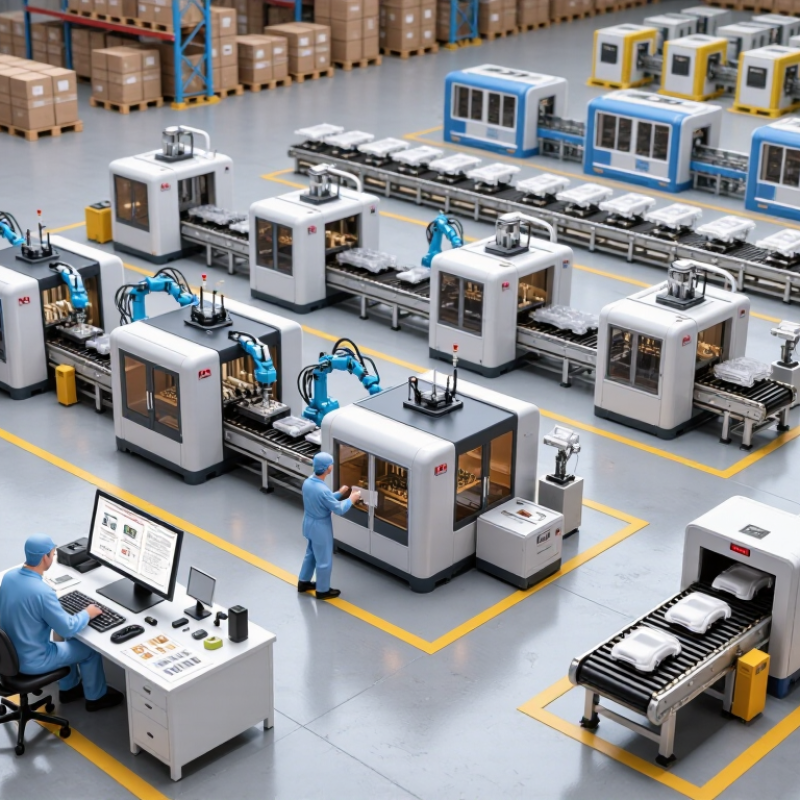
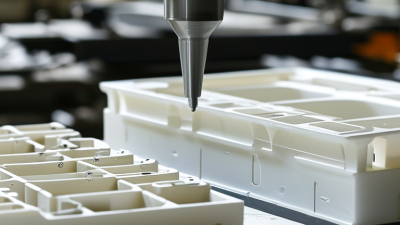
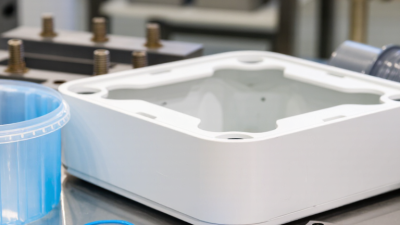
China’s product molding manufacturers turn digital drawings into reliable physical parts. They design molds, select resins, control temperature, and inspect every production batch. A useful mold may produce millions of identical pieces, from appliance housings to medical-device components.
The work is more technical than it appears. Engineers study shrinkage, cooling time, wall thickness, and ejection marks before cutting steel. They also adjust pressure when a trial part shows warping near a thin corner. Small process errors can create large waste. According to Fortune Business Insights, the global plastic injection molding market was valued at about USD 183.38 billion in 2023. Its projected growth reflects continuing demand for lightweight, precise components. PlasticsEurope reported global plastics production of approximately 400.3 million tonnes in 2022, showing the scale of the wider supply chain.
Quality systems make these manufacturers important. Production records, material certificates, dimensional checks, and traceability help customers manage safety and consistency. The International Organization for Standardization’s ISO 9001 framework is widely used for controlled processes, although certification alone does not guarantee excellent parts. That deserves attention. A factory can pass an audit and still miss practical feedback from operators.
Top manufacturers usually offer mold-flow analysis, prototype testing, automated inspection, and documented corrective action. They also reduce cycle time by improving cooling channels and maintenance routines. Ranking them is not simple. Public data often mixes mold making, molding, and assembly revenue. Buyers should examine sample reports, tolerance results, lead times, and factory communication instead of trusting a list alone.
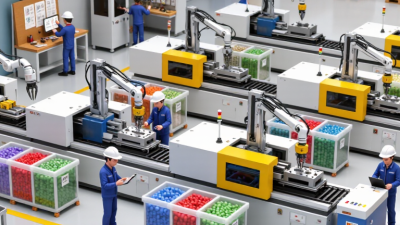
Selecting China’s top ten product molding manufacturers requires more than counting factory size. A credible review begins with a defined scope, such as injection molding, tooling, materials, and production volume. Companies should provide current factory records, equipment lists, quality certificates, and recent project evidence. Unverified claims should not influence the ranking.
Comparison works best through consistent scoring. Technical capability may include machine range, mold tolerance, automation, material knowledge, and inspection methods. Commercial performance should cover quoted lead time, sample approval, production stability, and communication speed. Auditors can examine measurement rooms, mold maintenance records, process charts, and rejected-part samples. Small details matter. A clean resin storage area often reveals stronger process discipline.
Customer experience also needs evidence. Independent references, repeat-order rates, warranty handling, and corrective-action reports can expose differences hidden by polished websites. Financial resilience and backup equipment deserve attention when projects involve long production cycles. A spreadsheet helps, but it can also create false precision. A factory may score well on capacity while struggling with design changes. Another may offer excellent engineering but lack enough machines during peak seasons. Site visits, sample trials, and technical interviews should challenge the initial ranking. Data should carry a date, because staffing, equipment, and certifications can change quickly. No ranking is perfectly objective. That is the part worth questioning.
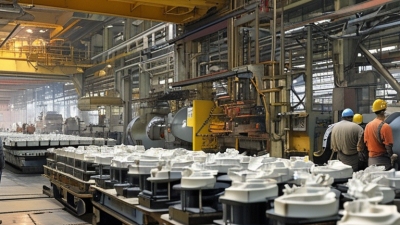
China’s top ten product molding manufacturers are best assessed by capability, not publicity. This profile-based selection compares tooling accuracy, production scale, material expertise, certification, and delivery control. Grand View Research values the global injection molded plastics market at more than USD 300 billion in recent estimates. China remains a major production base, supported by dense supplier networks and advanced machining capacity.
The first profile represents high-precision mold makers serving medical and electronic components. The second focuses on automotive interior parts and complex surface textures. A third specializes in large appliance housings, while the fourth handles thin-wall packaging with fast cycle times. The fifth combines mold flow analysis with automated inspection. The sixth supports low-volume prototypes and rapid tooling. The seventh provides multi-material molding and insert molding. The eighth concentrates on high-temperature engineering plastics. The ninth offers export-oriented production with documented quality systems. The tenth integrates mold design, molding, secondary finishing, and assembly.
Deloitte’s manufacturing research links digital monitoring with improved traceability and reduced process variation. In practice, buyers should inspect cavity balance, steel grades, sampling records, and maintenance logs. Ask for dimensional reports, not only polished photographs. Details can mislead. A capable supplier should explain shrinkage compensation, cooling-channel design, and expected tool life in practical terms. ISO 9001 certification helps, but it does not replace factory visits or independent sample testing. Some manufacturers present impressive equipment yet outsource critical steps. That weakness deserves careful review. Lead time estimates also need skepticism, especially for multi-cavity tools and difficult resins.
| Profile | Primary Manufacturing Region | Typical Years of Industry Experience | Main Molding Capabilities | Typical Mold Materials | Typical Mold Size Range | Common Product Materials | Industries Served | Quality & Process Controls | Export Readiness | Indicative Capability Rating |
|---|---|---|---|---|---|---|---|---|---|---|
| Manufacturer Profile 01 | Guangdong, Pearl River Delta | 20–30 years | High-volume injection molds, multi-cavity molds, hot-runner molds, and precision inserts | Pre-hardened steel, hardened tool steel, stainless steel, and copper alloys | Small precision molds to approximately 1,500 mm | PP, ABS, PC, PA, POM, PMMA, and TPE | Consumer electronics, household appliances, automotive components, and packaging | 3D CAD/CAM, CNC machining, EDM, CMM inspection, mold-flow analysis, and trial molding | Strong experience with international drawings, packaging, documentation, and shipment schedules | ★★★★★ |
| Manufacturer Profile 02 | Zhejiang, Yangtze River Delta | 15–25 years | Automotive injection molds, large exterior molds, interior trim molds, and structural parts | Hardened tool steel, pre-hardened steel, and corrosion-resistant steel | Medium to large molds, commonly up to approximately 2,500 mm | PP, ABS, PC/ABS, PA, PBT, and reinforced engineering plastics | Automotive, transportation equipment, industrial products, and electrical systems | Die spotting, dimensional inspection, mold-flow validation, process documentation, and sample approval | Suitable for overseas automotive programs requiring staged approvals and traceable revisions | ★★★★★ |
| Manufacturer Profile 03 | Jiangsu, Yangtze River Delta | 15–25 years | Thin-wall packaging molds, stack molds, closure molds, and high-cycle production tooling | Hardened stainless steel, hardened tool steel, and wear-resistant inserts | Small to medium molds, generally below approximately 1,200 mm | PP, HDPE, PET, POM, and other packaging-grade polymers | Food packaging, personal care, medical packaging, and household products | High-speed CNC, EDM, polishing, cavity balancing, cycle testing, and dimensional sampling | Experienced in container, cap, and closure projects for export-oriented production lines | ★★★★☆ |
| Manufacturer Profile 04 | Fujian, Southeast China | 10–20 years | Household product molds, appliance housings, appearance parts, and insert-molding tools | Pre-hardened steel, hardened steel, stainless steel, and aluminum for prototypes | Small to medium molds, typically up to approximately 1,800 mm | ABS, PP, PS, PC, PC/ABS, and TPE | Small appliances, kitchenware, consumer products, and electrical enclosures | CAD/CAM integration, CNC, EDM, texture coordination, first-article inspection, and trial production | Well suited to contract manufacturing programs requiring product and mold coordination | ★★★★☆ |
| Manufacturer Profile 05 | Shanghai and neighboring manufacturing zones | 20–30 years | Precision engineering molds, medical-component molds, insert molds, and complex mechanisms | Stainless steel, hardened tool steel, pre-hardened steel, and carbide components | Precision molds from micro-scale cavities to approximately 1,000 mm | PEEK, PC, POM, PA, PPS, medical-grade PP, and TPE | Medical devices, laboratory products, electronics, and precision industrial parts | Controlled measurement systems, CMM, optical inspection, cavity validation, and documented change control | Appropriate for regulated projects requiring detailed records and controlled production procedures | ★★★★★ |
| Manufacturer Profile 06 | Chongqing and Southwest China | 10–20 years | Automotive interior molds, functional plastic parts, low-pressure molds, and medium-volume tooling | Pre-hardened steel, hardened steel, and wear-resistant inserts | Medium to large molds, commonly up to approximately 2,000 mm | PP, ABS, PC/ABS, PA, POM, and fiber-reinforced polymers | Automotive, industrial machinery, transportation, and electrical equipment | CAE review, CNC, EDM, dimensional inspection, mold trials, and production feedback loops | Capable of supporting international projects with engineering files and remote design reviews | ★★★★☆ |
| Manufacturer Profile 07 | Anhui, East-Central China | 10–20 years | Commodity injection molds, household goods molds, simple multi-cavity tools, and replacement tooling | Pre-hardened steel, carbon steel for non-critical components, and hardened inserts | Small to medium molds, generally below approximately 1,500 mm | PP, PE, ABS, PS, PVC, and TPE | Household goods, packaging, consumer products, and basic industrial components | Conventional CNC, EDM, polishing, trial molding, and dimensional checks against approved drawings | Competitive for cost-sensitive export programs with moderate complexity | ★★★☆☆ |
| Manufacturer Profile 08 | Shandong, Bohai Economic Rim | 15–25 years | Large structural molds, appliance panels, industrial containers, and engineering plastic components | Pre-hardened steel, hardened tool steel, and corrosion-resistant steel | Medium to large molds, commonly up to approximately 3,000 mm | PP, ABS, HIPS, HDPE, PC/ABS, and reinforced PP | Appliances, logistics equipment, industrial products, and agricultural machinery | Large-format CNC, EDM, mold assembly, dimensional inspection, and full-size trial molding | Suitable for large tooling shipments where packaging, lifting, and transportation planning are important | ★★★★☆ |
| Manufacturer Profile 09 | Hubei, Central China | 10–20 years | Automotive functional molds, electrical housings, overmolding tools, and prototype-to-production tooling | Pre-hardened steel, hardened steel, stainless steel, and aluminum prototype tooling | Small to large molds, typically up to approximately 2,200 mm | PP, PA, PBT, ABS, PC, PC/ABS, and elastomers | Automotive electronics, industrial controls, electrical products, and consumer equipment | DFM review, mold-flow simulation, CNC, EDM, CMM inspection, and first-article reporting | Effective for projects requiring engineering collaboration across time zones | ★★★★☆ |
| Manufacturer Profile 10 | Guangxi and South China | 10–20 years | Packaging molds, daily-use product molds, prototype tooling, and short-run production molds | Pre-hardened steel, stainless steel, hardened inserts, and aluminum for rapid prototypes | Small to medium molds, generally below approximately 1,300 mm | PP, PE, PET, ABS, PS, PC, and TPE | Packaging, personal care, household products, consumer goods, and light industrial products | CAD/CAM, CNC, EDM, polishing, basic mold-flow review, and sample validation | Practical for small and medium export orders requiring shorter development cycles | ★★★☆☆ |
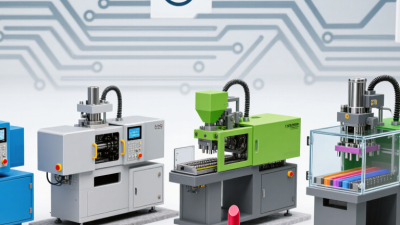
A credible top-ten list should examine technology, not factory size alone. Leading Chinese molding manufacturers commonly combine high-speed injection molding, precision tooling, compression molding, and insert molding. Grand View Research valued the global injection molded plastics market at about USD 387 billion in 2023. Its forecast indicates continued growth through 2030, driven by automotive, medical, electronics, and packaging demand.
Material selection reveals practical expertise. Common choices include polypropylene, ABS, polycarbonate, nylon, PEEK, silicone, and glass-fiber-reinforced compounds. Each behaves differently inside the mold. Nylon absorbs moisture. PEEK demands strict temperature control. Recycled resin may reduce impact, but inconsistent batches can increase surface defects. That trade-off deserves more attention.
The strongest manufacturers serve several demanding industries. Automotive programs require dimensional stability, lightweight structures, and repeated validation. Medical projects emphasize clean production, traceability, and tight tolerances. Consumer electronics depend on thin walls, cosmetic surfaces, and rapid tooling changes. Aerospace and industrial equipment often require engineering plastics and documented process control. The 2024 Wohlers Report estimated the global additive manufacturing market reached approximately USD 20 billion in 2023, showing why hybrid moldmaking now matters. Manufacturers increasingly use 3D-printed inserts for cooling trials and low-volume parts. It is useful, but not magic. A supplier may own advanced equipment and still lack robust design review, mold-flow analysis, or after-sales engineering support. That weakness can remain hidden until mass production begins.
How to Choose the Right Chinese Product Molding Manufacturer
A top-ten list is only a starting point. Your product requires a supplier that understands resin behavior, mold flow, tolerances, and production risk.
Grand View Research estimates the global injection molded plastics market at over USD 280 billion in 2023.
This scale creates choice, but not certainty. Ask each Chinese manufacturer for recent projects with similar materials, part sizes, surface finishes, and annual volumes. Request molded samples, dimensional reports, and a documented tool-maintenance plan.
Audit the factory before approving the mold. Check injection machines, mold-making equipment, inspection tools, and actual production records. ISO 9001 certification helps, but it does not replace process evidence. Review capability studies, first-article reports, and corrective-action records. Confirm who owns the tooling and how design changes receive approval.
Deloitte’s 2024 Global Smart Manufacturing Survey found that 92% of surveyed manufacturers view smart manufacturing as important for future competitiveness.
Therefore, ask whether the supplier uses traceability, automated inspection, or real-time process monitoring.
Small details matter. A stable supplier should explain cycle time, shrinkage allowances, cooling design, and expected tool life without vague promises. Visit the facility if possible. Watch operators handle parts, not just polished meeting rooms.
One sample may look excellent. It may still hide warpage after assembly. My practical mistake was trusting a perfect prototype too quickly. Repeated trials reveal more than confident presentations. Choose the manufacturer that documents problems clearly and improves them measurably.