Choosing the 2026 best injection molding machine requires more than comparing prices or clamping force.
Global demand remains resilient. Fortune Business Insights estimates the injection molding machine market at USD 15.39 billion in 2024. Its report projects growth to USD 22.09 billion by 2032. Grand View Research reports different figures, reflecting varied market definitions and regional coverage. That difference matters. Buyers should inspect the methodology behind every forecast.
Energy efficiency is now a purchasing priority. Servo-hydraulic systems can reduce idle power consumption during repeated production cycles. All-electric machines may offer cleaner operation, precise metering, and quieter factory floors. However, their higher purchase price may not suit every application. A low-cost machine can become expensive when downtime, scrap, and maintenance are included.
Dr. John Beaumont, a recognized injection molding specialist, wrote, “The mold is the heart of the injection molding process.” His observation remains practical in 2026. Even the most advanced machine cannot compensate for poor mold design, unstable cooling, or unsuitable material preparation.
This guide evaluates leading machines through measurable criteria. These include repeatability, energy use, automation compatibility, service access, safety features, and total cost of ownership. It also considers real factory conditions, such as dusty workshops, voltage fluctuations, limited technicians, and long-distance spare-parts delivery.
There is no universal winner.
A machine suited to automotive components may perform poorly in medical packaging. Regional support can matter more than a faster injection cycle. Buyers should question impressive specifications and request application trials, maintenance records, and transparent warranty terms. This comparison offers a practical starting point, not a permanent verdict.
For global buyers in 2026, an injection molding machine is a production system that turns heated plastic pellets into shaped parts.
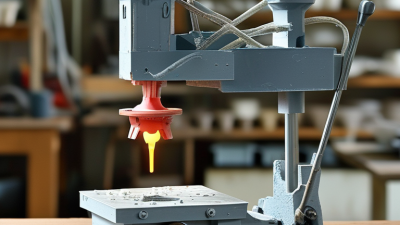
The machine feeds pellets into a heated barrel. A rotating screw melts and mixes the material. It then pushes the melt into a metal mold under controlled pressure.
The clamping unit holds the mold closed during cooling. After solidification, the mold opens, and ejector pins release the part.
Machine performance depends on more than injection speed. Buyers should check clamping force, shot size, screw diameter, mold dimensions, cycle time, and temperature accuracy. Energy use also matters during long production runs.
In practical factory evaluations, I inspect sample parts, pressure curves, cooling stability, and maintenance records. A larger machine is not automatically better. Oversizing may increase purchase and operating costs. A first selection can still be wrong if the material, mold, or production volume changes.
Tips: Match the machine to the material and part weight. Request a real mold trial before purchase. Check whether operators can access spare parts and technical support. Read the safety manual carefully. Small details matter. Also question optimistic cycle-time claims, because actual results may change with mold design, cooling conditions, and operator experience.
2026 Best Injection Molding Machine for Global Buyers: How Injection Molding Machines Work
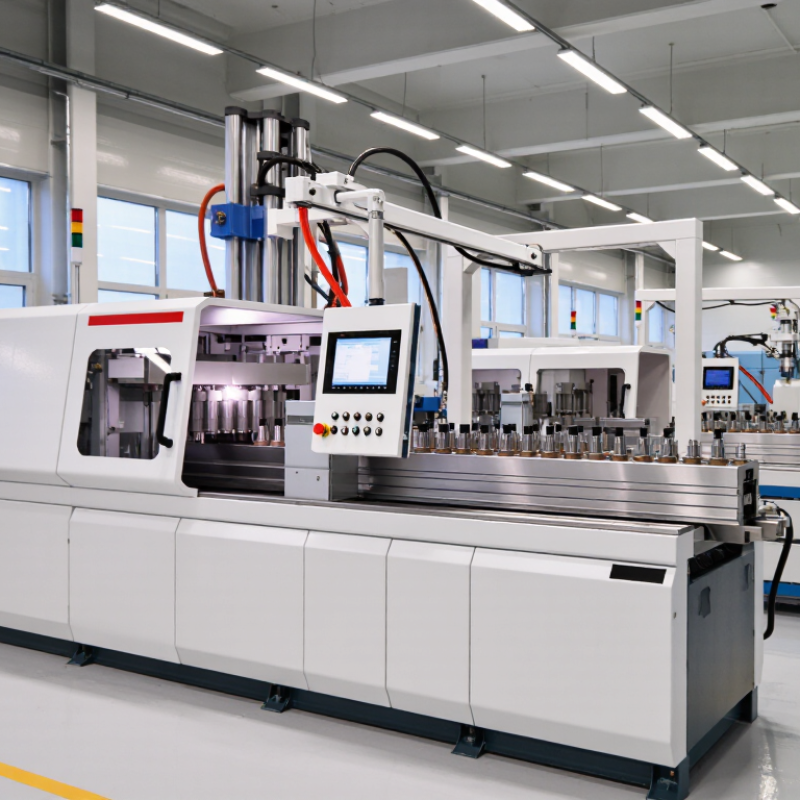
An injection molding machine turns measured plastic pellets into repeatable parts. The process starts in the hopper, where dried pellets enter a heated barrel. A rotating screw conveys, melts, and mixes the material. Heat bands help, but friction also supplies energy. The screw then moves forward like a plunger. It pushes the melt through a nozzle into a closed mold. The clamp must resist injection pressure. Otherwise, the mold can open and create flash.
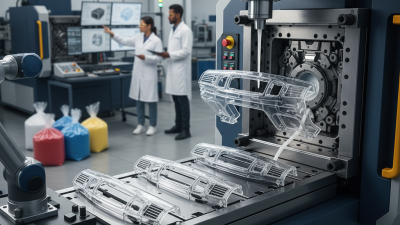
Inside the mold, molten plastic fills runners, gates, and the cavity. Sensors may track pressure, temperature, and screw position. After filling, the machine holds pressure to compensate for shrinkage. Cooling channels remove heat while the part gains strength. Then the clamp opens, and ejector pins release the finished piece. Cycle timing matters. Too little cooling causes distortion, while excessive cooling reduces output. Small adjustments can change weight, gloss, and dimensions.
For global buyers, selection should begin with material, part size, mold dimensions, and production volume. Check injection capacity, clamping force, repeatability, energy use, guarding, and maintenance support. Regional electrical requirements and safety documents also deserve careful review. A specification sheet never tells the whole story. Trial molding with the actual resin and mold is more reliable. Results can still vary. Ambient temperature, moisture, operator settings, and recycled content affect stability. Allow time for calibration, training, and honest technical questions before purchase.
Choosing the best injection molding machine in 2026 starts with the product, not the brochure. According to PlasticsEurope’s Plastics—The Fast Facts 2024, global plastics production reached 413.8 million tonnes in 2023. That volume hides very different factory demands. Hydraulic machines suit large parts and high clamping force. Electric machines offer repeatable dosing, cleaner operation, and lower idle energy use. Hybrid machines balance force, speed, and investment. For thin-wall packaging, high-speed electric systems are often logical. For insert molding, vertical machines can reduce handling steps.
Material choice changes the answer. Glass-filled engineering polymers need robust screw designs and stable temperature control. Recycled feedstock may vary between batches. OECD’s Global Plastics Outlook reports that global plastic waste generation more than doubled from 2000 to 2019. This makes efficient processing and material monitoring increasingly practical. Still, buyers should test real resin, molds, and cycle conditions. A showroom cycle can mislead. “Energy-saving” claims may weaken when auxiliary equipment runs continuously.
Tips: Compare total cost per good part, not purchase price. Request measured energy data in kWh per kilogram. Check local service response, spare-part access, mold height, tie-bar spacing, and automation interfaces. Consider moderate capacity instead of oversized equipment. Oversizing feels safe, but it can waste energy and floor space. A smaller electric machine may suit precise components. A rugged hydraulic model may fit bulky housings. The best choice is rarely universal.
Which machine types suit different production needs?
The ranges show typical clamping-force bands commonly encountered in global machine catalogs and production planning. Actual specifications vary by machine configuration, mold size, material, and application.
A reliable evaluation begins with real production data, not brochure claims. Measure cycle time, shot-to-shot repeatability, reject rates, and energy used per kilogram. Record results during stable production, then repeat the test after several hours. Heat can expose weaknesses that a short demonstration hides.
Match the clamping force and injection capacity to the actual mold and material. Excess capacity may increase purchase and operating costs. Insufficient capacity can create flash, unstable parts, and unnecessary downtime. Check pressure response, screw recovery, cooling performance, and mold change time. Small delays become expensive across thousands of cycles. Ask for maintenance records and inspect hydraulic lines, electrical cabinets, sensors, and moving surfaces. Details matter.
Use an independent power meter when possible. The machine’s display may not capture every auxiliary device. Compare energy consumption under identical settings and part weights. Review safety functions, documentation, training support, and spare-part availability for the target market. These factors influence efficiency beyond the injection cycle. I have seen attractive test results fail during continuous production because cooling water was poorly controlled. That mistake is easy to repeat. A practical trial with your own mold and material remains the strongest evidence. Record every adjustment, including the uncomfortable ones.
2026 Best Injection Molding Machine for Global Buyers?
What Global Buyers Should Check Before Purchasing
Global buyers should judge an injection molding machine by production reality, not impressive specifications. Required clamp force, shot size, mold dimensions, cycle time, and material type must match the planned parts. A machine that looks powerful may waste energy on smaller products. In practice, test the machine with your actual mold and resin whenever possible. Small differences in cooling time can change yearly output.
Serviceability matters across borders. Check electrical compatibility, control-system language, spare-part availability, remote support, and technician response times. Ask for documented factory acceptance tests, safety functions, energy data, and maintenance schedules. Confirm that the machine can meet local electrical, workplace, and environmental requirements. These details are less exciting, but they prevent expensive delays. A spreadsheet can miss practical problems, such as a cabinet door blocked by a nearby wall.
Tips: Request sample parts from comparable materials. Measure weight, dimensions, flash, and repeatability. Clarify delivery terms, installation duties, training, warranty coverage, and replacement-part pricing in writing. Inspect the supplier’s quality records and ask for references from similar production environments. Do not rely on one sales promise. My own preference is to leave capacity margin, although too much margin can increase purchase and operating costs. That balance deserves careful review.
Practical comparison of common injection molding machine configurations and the main technical, energy, compliance, and purchasing factors global buyers should verify.
| Machine Configuration | Typical Clamping Force | Common Applications | Key Advantages | Important Limitations | Typical Energy Profile | Buyer Checks Before Purchase |
|---|---|---|---|---|---|---|
| Hydraulic Injection Molding Machine | Approximately 50–4,000 tonnes | Automotive components, household products, industrial parts, large molded products | Wide tonnage range, strong injection performance, familiar maintenance procedures, suitable for demanding applications | Higher heat and noise generation; energy consumption can be greater when the hydraulic system operates continuously | Usually higher than variable-speed or all-electric alternatives; actual consumption depends on cycle time, pressure, and motor control | Check hydraulic pump type, servo or variable-speed control, oil-temperature management, leakage protection, and availability of hydraulic service parts |
| All-Electric Injection Molding Machine | Approximately 30–1,300 tonnes | Precision medical parts, electronic components, packaging closures, optical and technical products | Precise motion control, repeatable injection, clean operation, low idle energy use, and reduced hydraulic maintenance | Higher initial investment; maximum force, shot size, and mold-size options may be more limited in some configurations | Often lower than conventional fixed-speed hydraulic systems, especially in applications with frequent pauses or short cycles | Verify positional repeatability, injection-speed control, screw-drive design, cooling requirements, voltage compatibility, and service capability for electric drives |
| Hybrid Injection Molding Machine | Approximately 60–3,000 tonnes | Automotive parts, packaging, consumer goods, technical components, and general-purpose production | Combines hydraulic clamping or injection power with electric drive components; can balance performance, energy use, and purchase cost | System architecture varies considerably, making direct comparisons between suppliers difficult | Typically lower than older fixed-speed hydraulic designs, but savings depend on the percentage of electric motion and operating profile | Request a complete energy-consumption test method, motor and pump specifications, control-system details, and a list of replaceable components |
| Two-Platen Machine | Approximately 500–6,000 tonnes | Large automotive parts, pallets, containers, appliance housings, and other large molded products | Compact machine length for high clamping force, large mold-opening stroke, and good access for large molds | Requires careful foundation planning and specialized handling for large molds and heavy components | Varies by hydraulic or hybrid drive system; high-force production generally requires substantial installed power | Check mold dimensions, tie-bar clearance, platen parallelism, floor loading, foundation requirements, and safe mold-change access |
| Vertical Injection Molding Machine | Approximately 15–500 tonnes | Insert molding, overmolding, connectors, cable components, small technical parts, and rotary-table production | Convenient insert placement, reduced risk of inserts falling out before mold closing, and efficient operator access | Usually less suitable for very large parts or high-speed horizontal automation; operator safeguarding requires careful design | Depends on the drive system and table configuration; rotary tables and auxiliary units add power demand | Check insert-loading method, rotary-table indexing accuracy, guarding, ergonomic layout, automation interfaces, and mold-height adjustment range |
| Multi-Component or Two-Color Machine | Approximately 80–1,600 tonnes | Seals, grips, soft-touch products, multi-material components, decorative parts, and integrated assemblies | Produces bonded or assembled multi-material parts in one molding process, reducing secondary operations | Higher mold cost, more complex process setup, and increased requirements for material compatibility and synchronization | Usually higher than a single-material machine because of additional injection units, rotary systems, or mold movements | Confirm injection-unit synchronization, material compatibility, mold rotation or transfer method, controller capacity, and changeover procedure |
| High-Speed Packaging Machine | Approximately 100–650 tonnes | Thin-wall containers, caps, lids, food packaging, medical packaging, and high-volume consumer products | Fast injection and mold movements, short cycle capability, and compatibility with automated take-out and inspection systems | Requires precise molds, stable cooling, high-quality material handling, and disciplined preventive maintenance | Energy use per part can be competitive at high utilization, although installed power and cooling demand may be significant | Check injection acceleration, cycle-time validation, mold-protection response, cooling capacity, robot interface, and continuous-production reliability |
| Micro Injection Molding Machine | Approximately 5–100 tonnes | Microfluidic parts, miniature gears, medical components, laboratory products, and precision electronic parts | Designed for very small shot weights, reduced material waste, and tight control of small-volume injection | Not suitable for large shot sizes; process stability is highly sensitive to material drying, metering, and mold design | Generally low absolute power consumption, but auxiliary temperature-control and drying equipment can affect total usage | Verify minimum shot size, metering resolution, screw diameter, mold-temperature control, cleanroom requirements, and measurement capability |
| Recycled-Material Processing Configuration | Application-dependent; commonly 80–2,000 tonnes | Automotive parts, crates, pallets, construction products, household goods, and durable industrial components | Can process selected post-industrial or post-consumer materials and support material-cost reduction objectives | Material variability may affect viscosity, moisture, contamination level, color, odor, and part consistency | Depends strongly on regrind percentage, drying requirements, filtration, melt-temperature control, and cycle conditions | Check screw geometry, wear-resistant components, melt filtration, venting, drying system, regrind ratio, and material-quality control process |
| Global Purchasing and Compliance Requirements | Not applicable | All machine categories and export destinations | Reduces installation delays, customs problems, safety risks, and unexpected operating costs | Documentation and certification requirements differ by destination, voltage system, site conditions, and intended use | Confirm rated power, peak demand, compressed-air demand, cooling-water demand, and local utility conditions |
CE or applicable local conformity requirements Emergency-stop and guarding documentation Electrical schematic and user manual in the required language 50/60 Hz and voltage compatibility Spare-parts list and warranty terms Installation, training, remote support, and response-time commitments |
| Total Cost of Ownership | Not applicable | Long-term production planning and investment comparison | Provides a more accurate comparison than purchase price alone | Actual cost depends on utilization, labor, maintenance, energy tariffs, mold changes, and local technical support | Evaluate measured kWh per kilogram or kWh per cycle rather than relying only on motor nameplate power | Compare machine price, mold compatibility, energy use, cooling and drying costs, maintenance intervals, labor needs, spare parts, downtime risk, financing, shipping, installation, and operator training |