2026 Top Injection Molding Products Trends and Innovations?
The landscape of injection molding products is evolving rapidly. Innovations in this field are reshaping manufacturing processes and enhancing product capabilities. As we look ahead to 2026, understanding the trends that drive these changes is crucial for businesses.
Injection molding is a key technology in creating complex parts. From automotive components to consumer goods, its applications are vast. Companies are increasingly adopting sustainable practices, which leads to eco-friendly materials becoming essential in product design. However, the transition to sustainable injection molding is not without challenges.
Emerging technologies, such as 3D printing integration and advanced robotics, are also influencing this sector. Industry leaders must navigate these innovations while evaluating their effectiveness and impact. The future of injection molding products holds great promise, but it also requires a critical assessment of these advancements. Balancing innovation with practicality remains essential for success.
Emerging Technologies in Injection Molding for 2026
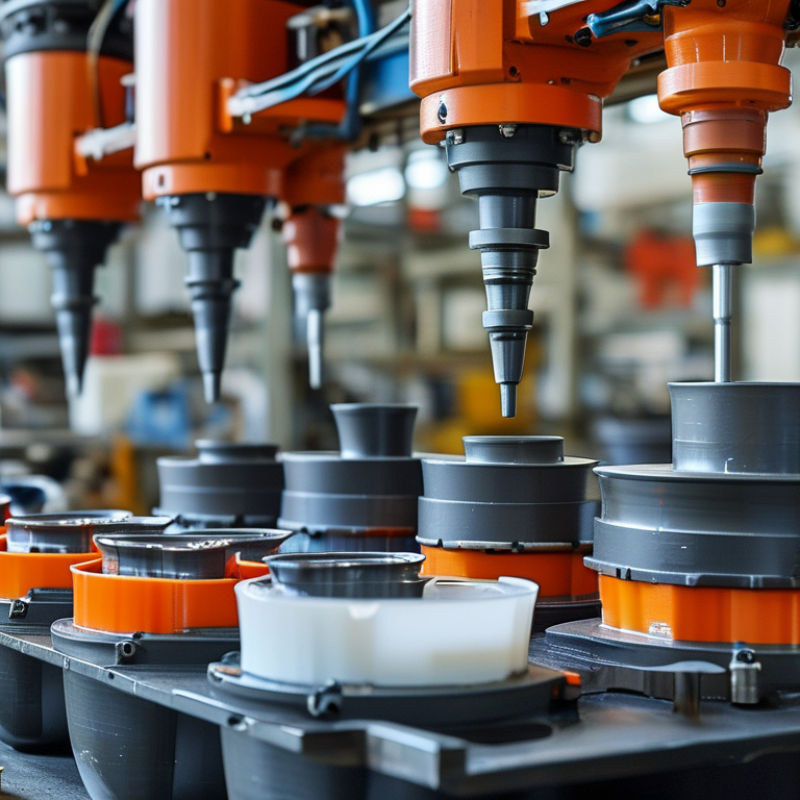
The injection molding industry is on the cusp of significant innovations in 2026. Emerging technologies are reshaping production methods. Additive manufacturing is increasingly integrated with traditional injection molding. This integration allows for more complex designs, reducing material waste. It's an exciting shift for efficiency in production.
Another noteworthy trend is the rise of sustainable practices. Biodegradable materials are gaining traction. Companies are exploring ways to combine these eco-friendly materials with existing processes. This transition poses challenges, especially regarding material properties and processing parameters. The industry must adapt, requiring collaboration between engineers and material scientists.
Automation is also revolutionizing the field. Smart factories are implementing advanced robotics for precision. These robots can work faster and with greater consistency than humans. Yet, they raise questions about the future workforce. Training and adapting to these technologies is crucial. Balancing innovation with human expertise is a challenge worth reflecting on.
Sustainable Materials Innovations in Modern Injection Molding
The injection molding industry is witnessing a transformative shift towards sustainable materials. According to a recent report by the Research Institute for Sustainable Manufacturing, over 30% of manufacturers are now prioritizing eco-friendly materials. This change is driven by growing consumer demand for environmentally responsible products. Many companies are exploring bioplastics, which are derived from renewable resources, as a viable alternative to traditional plastics.
In 2026, innovation in sustainable injection molding will become more prevalent. The introduction of new bio-based polymers is expected to reduce carbon footprints significantly. Research shows that using eco-friendly materials can lower greenhouse gas emissions by up to 70% compared to conventional materials. Additionally, advancements in recycling technologies are enhancing the feasibility of closed-loop systems. Companies are realizing that moving towards sustainable practices not only benefits the environment but also attracts a new customer base focused on eco-conscious choices.
Despite this progress, challenges remain. The current cost of sustainable materials can be prohibitive, and not all manufacturers are equipped to switch. Some still rely heavily on traditional plastics due to cost-effectiveness. However, the industry's willingness to innovate holds promise. Continuous research and development are necessary to overcome these barriers, ensuring that sustainability becomes the norm rather than the exception in injection molding.
2026 Top Injection Molding Products Trends and Innovations - Sustainable Materials Innovations in Modern Injection Molding
| Trend/Innovation |
Description |
Sustainability Impact |
Market Adoption Level |
| Biodegradable Polymers |
Use of polymers that decompose in natural environments, reducing plastic waste. |
High |
Increased adoption |
| Recyclable Materials |
Materials designed for easy recycling to create a circular economy. |
Medium |
Growing interest |
| Energy-Efficient Production |
Technologies that reduce energy consumption during the molding process. |
High |
Rapidly increasing |
| Digitalized Process Monitoring |
Utilization of IoT for real-time monitoring of injection molding processes. |
Medium |
Emerging trend |
Smart Manufacturing: Automation Trends in Injection Molding
In the realm of injection molding, smart manufacturing is reshaping the industry. Automation trends are becoming increasingly pivotal. Manufacturers are integrating advanced robotics into their processes. These robots perform repetitive tasks with precision. This not only enhances productivity but also reduces human error. The focus is shifting towards streamlined operations, where machines communicate in real-time.
Emerging technologies like IoT and AI are revolutionizing injection molding. They enable better monitoring and control of production processes. Smart sensors gather data, providing insights into machine performance. This data-driven approach fosters informed decision-making. However, the implementation of these technologies can be challenging. Many companies face resistance from traditional workers who fear job displacement. A balance must be struck to ensure collaboration between humans and machines.
As industries move towards fully automated systems, some concerns arise. Cybersecurity is becoming a critical issue. With increased connectivity, systems are more vulnerable to attacks. There is also the risk of over-reliance on technology. A failure in automation could halt production. Thus, while automation offers many benefits, careful consideration and planning are essential.
Design for Additive Manufacturing in Injection Molding Products
The integration of additive manufacturing into injection molding is revolutionizing product design. This approach allows for more complex geometries that traditional methods cannot achieve. Designers can explore intricate shapes, reducing material waste and increasing efficiency. Enhanced design freedom opens new possibilities for functionality and aesthetics in molded products.
However, this shift is not without challenges. Adapting existing workflows to accommodate additive processes can require significant changes. Engineers must navigate the balance between traditional and additive methods, ensuring quality and performance standards. Prototyping with additive manufacturing can speed up the design cycle but may introduce unexpected variables in production.
Additionally, the need for skilled professionals in this growing field is crucial. There's a gap between design concepts and practical execution. Teams must collaborate effectively to realize the potential benefits. Overall, while the fusion of additive manufacturing and injection molding offers exciting innovations, ongoing reflection and adjustment will be key to overcoming its complexities.
2026 Top Injection Molding Products Trends
Market Insights: Key Sectors Driving Injection Molding Innovations
The injection molding industry is witnessing exciting changes. Several key sectors are driving innovations in this field. The automotive sector, for instance, is demanding lighter, more durable components. These parts must withstand high-performance expectations while meeting sustainability goals. Innovations like advanced polymers are emerging to meet these needs.
Consumer electronics is another vibrant area. Devices require intricate designs, compact parts, and fast production cycles. The shift toward smart technology is pushing for more tailored solutions. Manufacturers must continually innovate to keep pace with rapid advancements. Moreover, we see a demand for customization in consumer goods.
Addressing the environmental impact is crucial. There is a push for biodegradable materials in various applications. However, the performance of these materials often raises questions. Achieving both sustainability and reliability is challenging. Industry players need to rethink their approaches. Exploring novel techniques and materials can help bridge the gap between desire and feasibility. Innovations must balance functionality with environmental responsibility.