2026 Top Trends in Thermoplastic Injection Molding Industry?
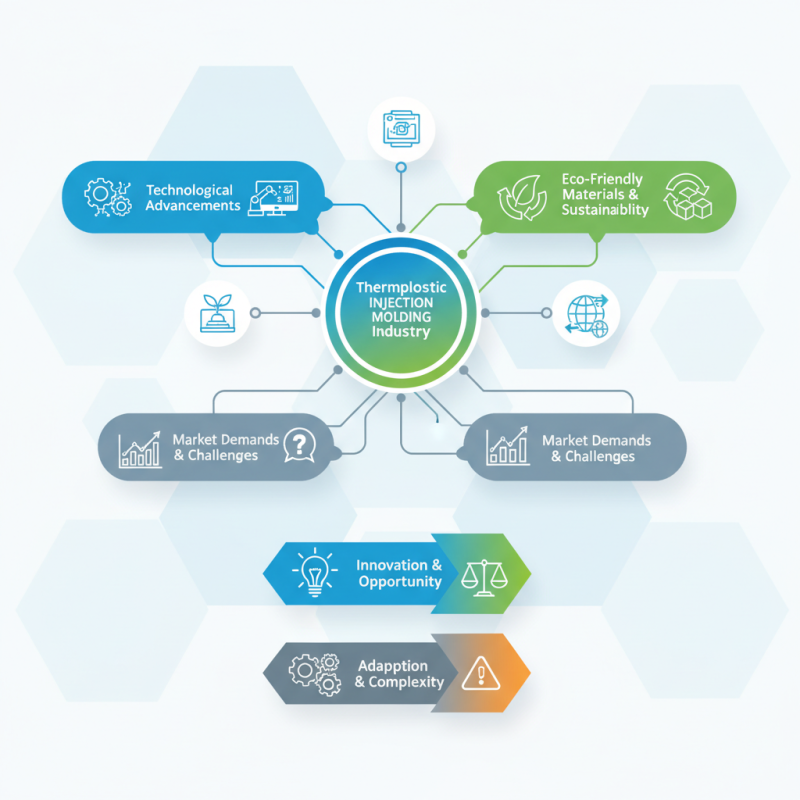
The thermoplastic injection molding industry is evolving rapidly. As we approach 2026, several key trends are shaping its future. These trends are driven by innovation, sustainability, and market demands.
Technological advancements are at the forefront. New machinery and software are enhancing efficiency. Additionally, eco-friendly materials are in high demand. Manufacturers are increasingly focusing on sustainable practices. The rise of circular economy principles is driving this change. Brands want to reduce their carbon footprint while maintaining quality.
However, challenges remain. The industry must adapt to fluctuating material costs and global competition. Firms need to balance innovation with practicality. While these trends are promising, they also require careful planning and adaptation. The future of thermoplastic injection molding is bright, yet complex. It invites both opportunities and challenges worth exploring.
Emerging Technologies in Thermoplastic Injection Molding for 2026
The thermoplastic injection molding industry is witnessing an exciting evolution in 2026. Emerging technologies are reshaping how products are designed and manufactured. For instance, advancements in automation enhance efficiency. Robots now handle complex tasks with precision. This shift reduces labor costs and production time.
Another notable trend involves the integration of AI in design processes. AI algorithms analyze data to optimize mold designs. This method minimizes material waste while increasing production speed. However, the reliance on technology raises concerns about creativity. Are we sacrificing innovative thinking for efficiency?
Moreover, sustainable practices are gaining focus. Biodegradable materials are becoming more popular. The industry is slowly recognizing environmental impacts. Yet, many manufacturers still struggle to adopt these materials on a large scale. Transitioning can be challenging, revealing gaps in knowledge and infrastructure. As the industry moves forward, the balance between innovation and sustainability remains a critical area for reflection.
Sustainability Trends Shaping the Future of Injection Molding Practices
As the thermoplastic injection molding industry evolves, sustainability becomes increasingly crucial. Companies are striving to minimize waste and reduce energy consumption in their processes. Traditional practices often led to significant environmental impacts, raising questions about their long-term viability. The industry now faces pressure to adopt greener alternatives.
Recycled materials are gaining popularity. More manufacturers are integrating post-consumer plastics into their production lines. This shift not only reduces reliance on virgin materials but also addresses plastic waste. However, the quality of recycled materials is sometimes inconsistent. This poses challenges for maintaining product standards. Engineers are experimenting with new formulations to improve the reliability of these materials.
In addition, energy-efficient technologies play a role in shaping the future. Injection molding machines are getting smarter, featuring real-time monitoring and automation capabilities. These advancements can reduce power usage significantly. Yet, the transition to these technologies may require substantial upfront investment. Many companies face the dilemma of balancing costs with the long-term benefits of sustainability. It’s a complex landscape that invites ongoing discussion and innovation.
Advancements in Materials Used in Thermoplastic Injection Molding
The thermoplastic injection molding industry is evolving rapidly. One significant trend is the advancement in materials. New polymers are emerging, enhancing both strength and flexibility. These materials can withstand heat better and resist chemicals. This leads to longer-lasting products.
More companies are exploring bio-based plastics. These materials are derived from renewable resources. They offer an eco-friendly alternative to traditional plastics. However, challenges remain in their cost and availability. The performance of these materials can vary widely, prompting careful considerations during selection.
Tips: Always test new materials thoroughly. Consider the end-use application to ensure compatibility. Engage with material suppliers to stay updated on innovations. Understanding the properties of these advancements is crucial for success in product development.
Market Dynamics and Consumer Demands Influencing the Industry in 2026
In 2026, the thermoplastic injection molding industry will witness significant shifts driven by market dynamics and consumer demands. Increasing awareness of sustainability will push manufacturers to adopt eco-friendly materials. A recent report indicates that the demand for biodegradable thermoplastics is projected to increase by 25% annually. This shift reflects consumers' growing preference for sustainable alternatives.
Moreover, the rise in customization is shaping production processes. Consumers now seek tailored solutions, leading to higher demand for small batch production. According to industry data, companies that embrace flexible manufacturing practices can expect a 15% increase in customer satisfaction. This trend challenges traditional mass production techniques and requires constant innovation in mold design and processes.
Nonetheless, the industry faces obstacles in maintaining quality during rapid shifts in consumer preferences. Balancing speed and sustainability without sacrificing quality is a challenge. As businesses navigate these complexities, they must reassess their operational strategies to align with evolving market expectations. Continuous research and development will be essential to stay competitive.
The Role of Automation and AI in Modern Injection Molding Processes
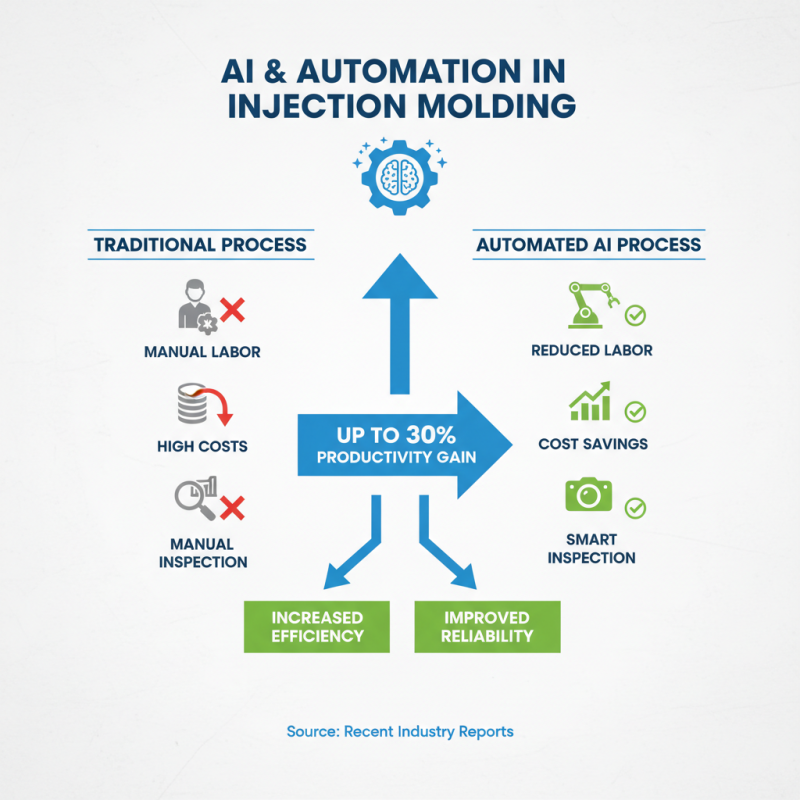
The role of automation and AI in injection molding processes is increasingly significant. According to recent industry reports, companies integrating AI technologies see productivity gains of up to 30%. This shift helps reduce manual labor, cutting costs in production. Automation streamlines tasks like material handling and part inspection. These improvements make processes more efficient and reliable.
However, the journey into automation isn't without challenges. Many companies struggle with the initial investment, which can be substantial. A 2023 study showed that 40% of firms find it difficult to transition their legacy systems to modern solutions. Furthermore, there's a steep learning curve associated with adopting AI technologies. A lack of skilled workforce can hinder implementation.
Despite these obstacles, the potential for innovation remains high. Real-time data analytics can significantly enhance quality control. This technology allows for immediate adjustments during production. Such adaptations are essential in a competitive market where precision matters. Yet, while the future looks promising, businesses must continuously reassess their strategies. Embracing change is necessary, but it's equally important to learn from missteps along the way.