
Choosing among the top Single Pole Transformer manufacturers requires more than comparing catalog prices. Utilities, contractors, and industrial buyers must examine efficiency, insulation quality, surge performance, delivery capacity, and field support. A transformer may look identical on paper, yet perform differently beside a dusty roadside cabinet or beneath a coastal storm.
The U.S. Department of Energy’s 2024 Distribution Transformer Supply Chain Review describes extended lead times, rising material costs, and limited manufacturing capacity. These pressures make supplier reliability almost as important as technical ratings. The International Energy Agency also identifies grid expansion and equipment availability as urgent issues in its Electricity Grids and Secure Energy Transitions report. Market forecasts from firms such as MarketsandMarkets indicate continuing demand for distribution transformers, although their estimates differ by scope and methodology. That difference deserves attention.
John D. McDonald, an IEEE Fellow and power-system specialist, has described transformers as “the backbone of the electric power system.” His observation explains why manufacturer selection cannot depend on brand recognition alone. Strong candidates should demonstrate tested designs, documented quality systems, realistic factory capacity, and responsive warranty service. Ask for evidence.
This guide examines leading Single Pole Transformer manufacturers through those practical criteria. It considers product range, compliance documentation, customization, delivery performance, and customer experience. No ranking is permanently correct. Regional certification rules, utility specifications, and changing copper and steel prices can alter the result. The most expensive option is not automatically the safest, either. Procurement teams should verify every claim before making a final decision.
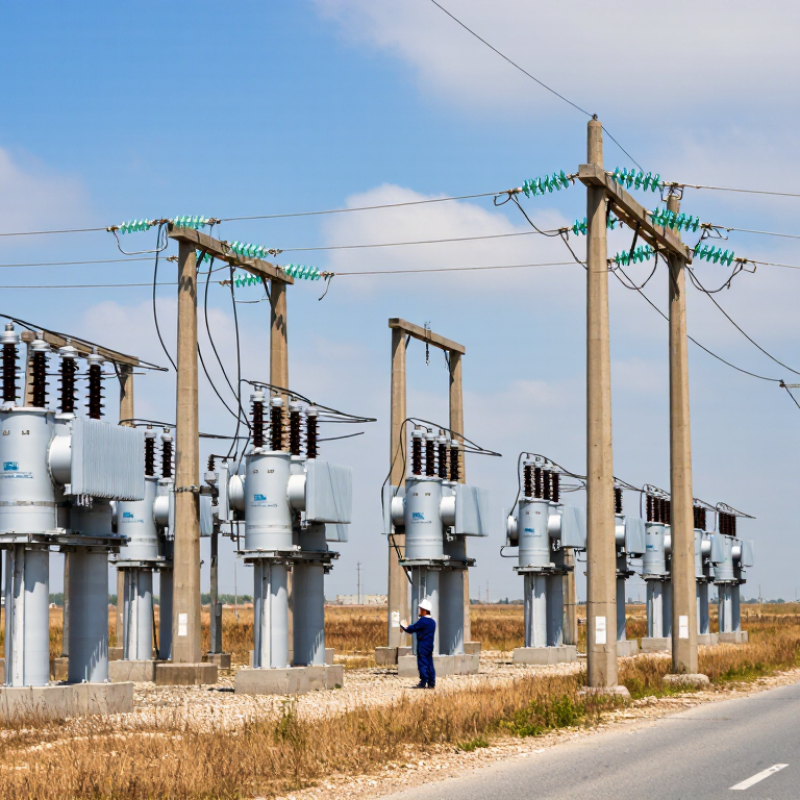
What Are the Top Single Pole Transformer Manufacturers?
Single pole transformers are compact distribution transformers mounted on utility poles. They usually serve one residential customer group or a small commercial load. A typical unit lowers medium-voltage electricity to usable low voltage. It contains a laminated steel core, primary and secondary windings, insulating oil, bushings, and a sealed or vented tank. Some installations also include surge arresters and fuse links.
Their structure supports simple field installation and economical maintenance. The core transfers magnetic energy between windings. Insulation prevents internal breakdown. The tank removes heat and protects components from moisture. In practice, engineers must check voltage ratio, rated capacity, temperature rise, sound level, and short-circuit strength. “Small” does not mean uncomplicated.
The International Energy Agency’s Electricity 2024 report projected global electricity demand growth of about 4% in 2024 and 2025. This expanding demand increases the need for reliable distribution equipment, especially in growing residential areas and rural networks. The U.S. Department of Energy also highlights transformer efficiency and material availability as important grid concerns in its 2024 distribution-transformer rulemaking. These findings help define what top manufacturers should deliver: verified efficiency, durable insulation, consistent testing, and dependable delivery. Field experience adds another requirement—designs must tolerate heat, dust, rain, and uneven loading. Manufacturer rankings can be useful, but they are not absolute. Local service quality is sometimes overlooked.
Choosing the top single pole transformer manufacturer requires more than comparing price or catalog size. Start with verified performance data. The U.S. Department of Energy’s 2024 distribution transformer rule projects major lifetime energy savings from improved efficiency. Ask manufacturers to provide tested no-load and load-loss values, not estimated figures. Small percentage differences matter across thousands of energized units.
Technical compliance should be measurable. Check alignment with applicable IEEE and IEC standards, including insulation, temperature rise, impedance, short-circuit strength, and dielectric testing. A reliable manufacturer should provide routine and type-test records from qualified laboratories. Review oil quality controls, tank welding procedures, corrosion protection, and bushing traceability. Look closely. A polished datasheet can still omit important test conditions.
Manufacturing experience also appears in field support. Evaluate failure-rate records, warranty terms, spare-part access, and realistic delivery times. The International Energy Agency’s Electricity Grids and Secure Energy Transitions report highlights rising grid investment needs and supply-chain pressure. Capacity matters, but quality must remain stable during demand spikes. Ask whether the factory can repeat production results across different batches. Factory audits, ISO-certified processes, and transparent corrective-action reports strengthen trust. I would not choose a supplier from efficiency claims alone. Independent verification is essential, although it can slow procurement. That delay may be worthwhile when equipment must operate outdoors for decades.
| Evaluation Criterion | Relevant Technical Data | Recommended Benchmark | How to Verify | Importance |
|---|---|---|---|---|
| Rated Capacity | Single-phase pole-mounted distribution transformers are commonly specified from approximately 5 kVA to 167 kVA, although available ratings vary by application and utility requirements. | The manufacturer should offer a rating that matches the calculated continuous load, starting current, and future capacity requirements. | Review the published rating schedule, nameplate data, load calculation, and allowable overload guidance. | High |
| Primary Voltage Compatibility | Common primary voltage classes include medium-voltage systems from approximately 2.4 kV through 34.5 kV, depending on the grid and local standards. | The transformer should support the exact system voltage, phase configuration, frequency, and insulation level required at the installation site. | Check the nameplate, voltage-range chart, basic impulse insulation level, and utility specification. | Critical |
| Secondary Voltage Options | Typical single-phase outputs include 120/240 V, 240/480 V, and other utility- or project-specific secondary configurations. | The secondary voltage and grounding arrangement should match the connected equipment and service entrance design. | Verify the wiring diagram, terminal configuration, connection symbols, and approved equipment schedule. | Critical |
| Applicable Standards | Relevant requirements may include IEEE C57.12.00, IEEE C57.12.20, IEC 60076, CSA requirements, or applicable national utility standards. | The manufacturer should clearly state which standard governs design, construction, testing, and labeling. | Request the declaration of conformity, standard reference, type-test reports, and routine-test records. | Critical |
| Efficiency and No-Load Loss | Transformer losses consist mainly of no-load loss and load loss. Lower losses reduce operating cost and temperature rise over the service life. | Compare guaranteed loss values at the same rating, voltage, frequency, and reference temperature rather than relying only on a general efficiency claim. | Review guaranteed-loss data, efficiency calculations, and independent or witnessed test results. | High |
| Insulating and Cooling Medium | Common designs use mineral oil or less-flammable ester fluids; dry-type construction may be selected where liquid containment is undesirable. | The fluid or insulation system should match fire-safety rules, environmental requirements, climate, and maintenance policy. | Confirm fluid type, fire point or flash point where applicable, environmental documentation, and fluid test requirements. | High |
| Temperature Rise | Temperature-rise limits are defined by the applicable transformer standard and insulation system. Lower operating temperature generally supports longer insulation life. | The proposed design should meet the project standard while maintaining adequate thermal margin under the specified ambient conditions. | Review the temperature-rise test report, ambient design conditions, and overload-temperature calculations. | High |
| Short-Circuit Strength | Distribution transformers must withstand specified thermal and mechanical stresses caused by external short circuits. | The design should have documented short-circuit withstand capability suitable for the system fault-current level and protection settings. | Compare short-circuit withstand data with the available fault current and request applicable test evidence. | Critical |
| Tap Configuration | Off-circuit taps are commonly provided to compensate for system-voltage variation; the number and percentage of taps depend on the design. | Tap positions should provide the required voltage adjustment without exceeding the approved operating range. | Check the nameplate tap chart, de-energized tap-changer instructions, and utility voltage requirements. | Medium |
| Pole-Mounting and Mechanical Design | Important factors include tank strength, mounting brackets, lifting provisions, clearances, center of gravity, and total installed weight. | The transformer should be compatible with the pole, crossarm, hardware, wind conditions, and local structural code. | Review outline drawings, mounting details, weight distribution, structural calculations, and installation instructions. | Critical |
| Environmental Protection | Outdoor transformers require protection against moisture, corrosion, ultraviolet exposure, contamination, and temperature extremes. | The enclosure coating, tank material, gaskets, and corrosion protection should suit the site classification and service environment. | Examine coating specifications, salt-spray or corrosion-test information, enclosure details, and environmental ratings. | High |
| Routine and Type Testing | Typical checks include winding resistance, ratio verification, polarity or phase-relation checks, dielectric tests, and leak testing where applicable. | Every unit should receive documented routine testing, while representative designs should have appropriate type or design-test evidence. | Request factory test reports, inspection and test plans, calibration records, and sampling procedures. | Critical |
| Quality Management | Consistent production depends on controlled procedures for materials, winding, drying, assembly, sealing, testing, and traceability. | A documented quality-management system with batch traceability and corrective-action procedures is preferred. | Review quality certificates, process-control records, incoming-material inspection, and nonconformance reports. | High |
| Lead Time and Supply Capacity | Delivery time is affected by core steel, copper or aluminum conductor, insulating fluid, bushings, and testing capacity. | The supplier should provide a realistic production schedule with defined milestones and contingency planning. | Evaluate the manufacturing schedule, confirmed material availability, capacity statement, and historical delivery performance. | High |
| Warranty and Technical Support | Support normally covers manufacturing defects, documentation, commissioning guidance, troubleshooting, and replacement-part availability. | Warranty terms, exclusions, response times, and service responsibilities should be clear before purchase. | Compare the written warranty, service-level commitments, technical documentation, and after-sales support process. | Medium |
| Total Cost of Ownership | Lifecycle cost includes purchase price, transport, installation, energy losses, inspections, fluid management, repairs, and disposal. | Selection should be based on evaluated lifecycle cost rather than initial purchase price alone. | Use guaranteed losses, electricity-cost assumptions, expected service life, maintenance intervals, and disposal requirements. | Critical |
Single-pole transformer manufacturers differ most in product strength, not brochure size. Some specialize in compact distribution units for rural feeders and light commercial loads. Their designs often prioritize low losses, simple mounting, and fast installation. Others build higher-capacity units with stronger insulation systems and better thermal control. In field inspections, I look for clear nameplates, sealed bushings, accessible grounding points, and complete test records. Small details matter. They reduce surprises during commissioning.
Manufacturing depth also separates reliable suppliers from capable-looking ones. Strong producers control winding quality, core assembly, tank welding, and routine testing through one system. This can improve consistency between production batches. Look for documented impedance values, temperature-rise data, dielectric test results, and verified efficiency figures. Certification helps, but it does not replace factory discipline. A polished certificate cannot repair poor moisture protection. That is easy to forget.
The best fit depends on the installation, not the loudest claim. For coastal sites, corrosion-resistant coatings and sealed construction deserve attention. For cold regions, low-temperature materials and flexible accessories may matter more. Utility projects often value service parts, technical support, and stable delivery schedules. I have seen a lower-priced unit create higher costs through delays and rewiring. Still, no manufacturer is perfect. Specifications can miss local loading habits, maintenance skill, or future demand. Buyers should question assumptions before approving the final design.
Reliable single pole transformer manufacturers demonstrate compliance, not merely attractive specifications. Their designs should align with IEC 60076 and IEEE C57.12.00 requirements. These standards address insulation, temperature rise, construction, and electrical performance.
Safety features deserve equal attention. Pressure-relief devices, sealed tanks, corrosion-resistant coatings, and properly rated bushings reduce field risks. Some installations also require coordinated surge protection. Small details matter.
Quality testing separates dependable suppliers from inconsistent ones. Routine tests should include winding resistance, turns ratio, insulation resistance, and applied-voltage testing. Manufacturers should also verify no-load losses, load losses, oil leakage, and temperature performance.
IEEE C57.12.90 provides recognized test procedures for distribution transformers. Testing is evidence. However, a certificate alone cannot reveal every production weakness.
The U.S. Department of Energy’s technical analysis reports that distribution transformer losses consume tens of billions of kilowatt-hours annually. That figure makes efficiency data commercially important, not decorative.
The International Energy Agency estimates annual grid investment must exceed 600 billion dollars by 2030. This pressure may encourage faster production, but speed can weaken inspection discipline.
A strong manufacturer provides traceable test records, calibrated instruments, and material certificates. Factory acceptance testing should match the buyer’s operating conditions.
No checklist catches everything. Independent inspection remains worthwhile for critical projects.
Choosing the right single pole transformer manufacturer requires more than comparing prices. The top supplier should understand your load profile, installation environment, and maintenance expectations. Ask for clear data on kVA rating, primary and secondary voltage, frequency, insulation level, impedance, and temperature rise. Small details matter.
Review how the manufacturer controls quality. Request routine test reports, material traceability, and evidence of production experience with similar utility or industrial applications. A reliable factory should explain its design process without hiding behind technical language. Check enclosure protection, corrosion resistance, cooling performance, and expected service life. Field references can reveal problems that brochures rarely mention.
Consider support after delivery. Confirm lead times, spare-part availability, warranty terms, inspection procedures, and response times for technical questions. A low quotation may exclude testing, transport protection, or installation guidance. That can become expensive later. I have learned that a polished datasheet is not enough; communication during a design change often shows the manufacturer’s real capability. Ask how they handle unusual voltage requirements, damaged units, or delayed site conditions. No supplier is perfect. The better choice is usually the one that documents limitations clearly and offers practical solutions. Evaluate total ownership cost, not only the purchase price.
How to Select the Right Single Pole Transformer Manufacturer: compare suppliers by their ability to provide commonly used distribution-transformer capacity ratings, dependable compliance, delivery capability, and application support.
The chart shows common single-pole distribution transformer nameplate capacities in kVA. These ratings are widely used in utility distribution applications, while the final selection should also consider primary and secondary voltage, insulation level, frequency, cooling method, efficiency, standards compliance, environmental conditions, and after-sales support.
