
Choosing a reliable supplier for 304 Stainless Steel Plate requires more than comparing online prices. Material quality, production consistency, documentation, and delivery performance can directly affect fabrication results. This guide reviews ten notable suppliers worldwide, using practical criteria that purchasing teams and engineers commonly consider.
The evaluation focuses on stainless steel grade verification, plate thickness tolerance, surface finish, mill certificates, testing procedures, and export experience. It also considers whether suppliers support custom dimensions, edge treatment, packaging, and technical communication. A polished website proves little. Real reliability appears in traceable heat numbers, clear inspection records, and plates that arrive without deep scratches, warped edges, or moisture stains.
Details matter.
The selected companies represent different manufacturing regions and business models. Some operate large integrated mills, while others specialize in processing, distribution, or project-based supply. Their strengths may differ by application, order volume, and destination market. A supplier excellent for heavy industrial projects may not suit a small fabrication workshop.
This ranking should not be treated as an absolute verdict. Supplier capabilities can change, and published information may not reveal every operational weakness. Buyers should request current certificates, confirm applicable standards, inspect sample plates, and clarify delivery terms before placing an order. Even experienced purchasers can overlook packaging quality or small tolerance differences. That is worth remembering.
The following overview offers a practical starting point for comparing global suppliers of 304 Stainless Steel Plate. It aims to support informed decisions, not replace independent technical verification.
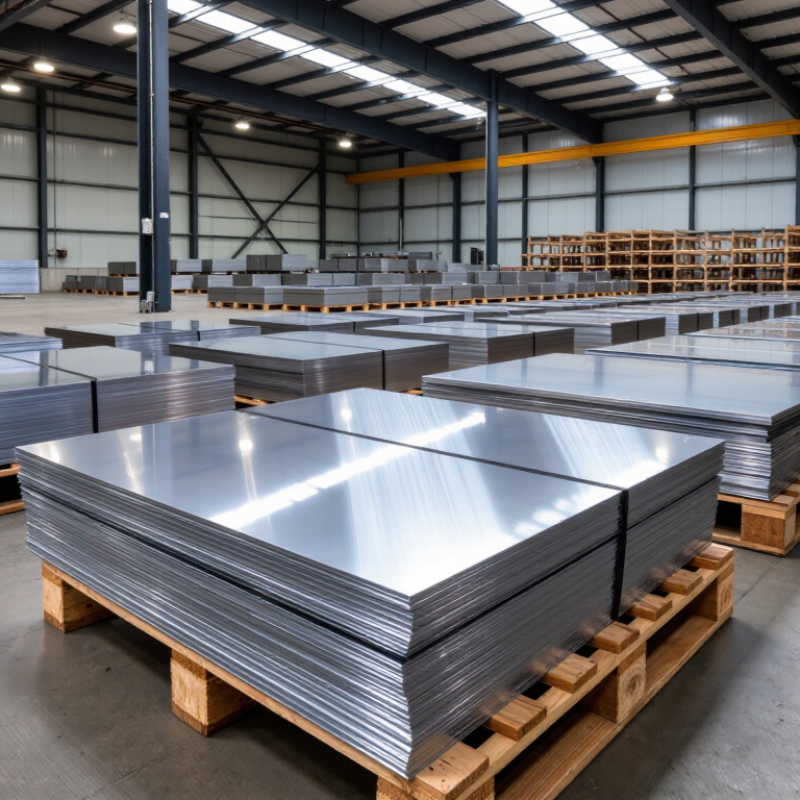
304 stainless steel plate is a flat, corrosion-resistant product made from an austenitic stainless steel grade. It usually contains about 18% chromium and 8% nickel, with a low carbon level. Chromium forms a thin protective oxide film on the surface. That film can repair itself when exposed to oxygen.
It is widely used for food-processing equipment, kitchen surfaces, storage tanks, architectural panels, and general fabrication. The plate can be cut, bent, welded, and polished with suitable equipment.
It remains non-magnetic or only slightly magnetic after normal processing. Common thicknesses range from thin sheet-like gauges to heavy industrial plate. Surface finishes may include brushed, polished, or mill finish.
304 is capable, not invincible. Chloride-rich water, salt spray, and stagnant moisture can cause staining or pitting. It may not be the best choice for severe coastal or chemical environments.
Fabricators should verify thickness, surface condition, chemical composition, and mill test certificates before production. Positive material identification can also reduce costly mix-ups.
In practice, poor cleaning may damage an otherwise suitable plate. This detail is easy to overlook. Specifications such as ASTM A240 are often used for purchasing and inspection, but the final selection should match the actual temperature, chemical exposure, and forming requirements.
When comparing global 304 Stainless Steel Plate Suppliers, begin with proof, not polished websites. In plant audits, I check heat numbers against mill test certificates and physical markings. The chemistry should confirm chromium and nickel ranges for 304 grade. Thickness tolerance matters as much as nominal size. A 6 mm plate may not measure exactly 6 mm. Ask how variation is controlled and recorded.
Evaluate surface finish under practical light, not showroom lighting. Inspect edges, scratches, pits, and protective film adhesion. Request samples from the same production route used for your order. Reliable suppliers explain annealing, pickling, cutting, and testing procedures clearly. They should provide traceability from coil or slab to finished plate. Independent inspection can verify dimensions, hardness, and surface condition before shipment.
Commercial reliability needs equal attention. Compare realistic lead times, packing methods, container loading photos, and responses to technical questions. A low quotation may exclude testing, export packaging, or tolerance control. I once trusted a polished sample too quickly; the bulk plates showed inconsistent flatness. That mistake changed my checklist. Review claims, delivery records, complaint handling, and replacement terms. Strong suppliers welcome difficult questions, admit limits, and document corrective action.
| No. | Evaluation Dimension | Recommended Verification Benchmark for 304 Stainless Steel Plate | Why It Matters to Global Buyers | Required Evidence or Documents | Priority |
|---|---|---|---|---|---|
| 1 | Material Grade and Chemical Composition | Confirm compliance with ASTM A240/A240M, EN 10088-2, or an equivalent applicable standard. Typical 304 requirements include chromium of approximately 18.0–20.0%, nickel of 8.0–10.5%, and carbon not exceeding 0.07% under ASTM A240. | Correct chemistry supports corrosion resistance, formability, weldability, and consistent performance in service. | Heat analysis, product test certificate, spectrometer report, and traceable heat number. | Critical |
| 2 | Mechanical Properties | For annealed 304 plate under ASTM A240, commonly specified minimum values include 205 MPa yield strength, 515 MPa tensile strength, and 40% elongation, subject to product thickness and the governing standard. | Mechanical data helps engineers confirm suitability for forming, fabrication, pressure-related applications, and structural use. | Tensile test results, yield-strength data, elongation results, and an independent laboratory report when required. | Critical |
| 3 | Plate Thickness and Dimensional Accuracy | Evaluate actual thickness, length, width, flatness, squareness, and edge condition against the tolerance requirements of the purchase specification and the applicable product standard. | Tight dimensional control reduces machining, fit-up, welding, and material-loss costs. | Mill tolerance chart, calibrated inspection records, dimensional inspection report, and sample measurement data. | Critical |
| 4 | Surface Finish and Appearance | Verify the requested finish, such as No. 1, 2B, BA, No. 4, or No. 8, together with surface cleanliness, scratch limits, pits, scale removal, and protective-film requirements. | Surface condition affects appearance, cleanability, fabrication quality, and the amount of finishing required after delivery. | Finish specification, approved reference sample, inspection photographs, surface inspection report, and packing details. | High |
| 5 | Heat Treatment and Metallurgical Condition | Confirm that the material is supplied in the condition ordered, normally solution-annealed for standard 304 plate, with descaling or pickling performed where specified. | Proper metallurgical condition supports corrosion resistance, ductility, forming behavior, and weld performance. | Annealing records, furnace traceability, heat-treatment parameters, pickling records, and metallurgical test results. | High |
| 6 | Quality Management and Traceability | Assess whether the supplier operates a documented quality management system, preferably certified to ISO 9001, with traceability from raw material or melt through cutting, inspection, packing, and shipment. | Traceability makes nonconformance investigation, replacement, warranty handling, and regulatory review more reliable. | Current certificate, scope of certification, quality manual excerpt, heat-number system, and corrective-action records. | High |
| 7 | Testing and Inspection Capability | Review the availability of chemical analysis, tensile testing, hardness testing, dimensional inspection, surface inspection, and additional non-destructive testing when required by the project. | In-house or controlled testing can shorten release time and improve consistency between production lots. | Laboratory accreditation or calibration records, inspection and test plan, sample reports, and third-party inspection procedure. | High |
| 8 | Fabrication and Customization Capability | Check whether the supplier can provide cutting, edge preparation, leveling, drilling, protective film, marking, and custom packaging without compromising dimensional tolerances. | Value-added processing can reduce local fabrication steps, handling costs, and project lead time. | Processing equipment list, tolerance capability statement, sample drawings, production photographs, and approved trial pieces. | Medium–High |
| 9 | Export Logistics and Packaging | Evaluate experience with seaworthy packing, moisture protection, pallet or skid loading, container utilization, cargo marking, and documentation for international shipments. | Appropriate packaging and logistics planning reduce transit damage, corrosion, delays, and customs-related problems. | Packing specification, loading plan, export references, commercial invoice, packing list, certificate of origin, and transport documents. | Medium–High |
| 10 | Commercial Reliability and Total Cost | Compare quotation validity, minimum order quantity, production lead time, payment terms, delivery performance, claims handling, and total landed cost rather than price alone. | A lower unit price may be offset by poor yield, rework, freight charges, delays, inspection costs, or inconsistent quality. | Formal quotation, production schedule, delivery-performance history, warranty terms, reference checks, and landed-cost calculation. | High |
Buyer note: The applicable standard, tolerances, testing scope, finish, and acceptance criteria should be stated clearly in the purchase order. ASTM, EN, JIS, and other standards may use different requirements, so their values should not be treated as interchangeable without technical review.
The top 10 304 stainless steel plate suppliers worldwide are usually judged by more than production volume. Reliable suppliers provide consistent chemistry, stable thickness, and traceable heat numbers. Buyers should review mill test certificates before approving large orders. These documents should show chromium, nickel, carbon, yield strength, and tensile strength.
Practical experience matters. A qualified supplier can recommend 2B, BA, or brushed finishes for different applications. They should also explain how plate thickness affects welding, forming, and surface appearance. Check whether the supplier follows recognized standards, such as ASTM A240 or EN 10088. Request samples when surface quality is critical. Small scratches can become expensive problems later. Packaging also deserves attention. Waterproof paper, edge protection, and strong steel strapping help plates arrive without dents or corrosion marks.
A useful top-ten comparison should include delivery performance, inspection support, export experience, and communication speed. Ask for realistic lead times, not optimistic promises. Some suppliers offer excellent prices but struggle with unusual dimensions or urgent replacements. That weakness may matter more than a low quotation. Independent inspection can improve confidence, although it adds cost and time. Payment terms, minimum order quantities, and complaint handling should be reviewed in writing. Rankings can change quickly because capacity, raw material costs, and service quality are not permanent. A supplier that performed well last year may still require careful reassessment today.
When comparing the top 10 suppliers, quality should mean more than a bright surface. Check chemical composition, thickness tolerance, flatness, edge condition, and finish consistency. A reliable supplier provides mill test reports for each heat or batch, not a generic certificate copied from an old order. ISO 9001 supports process control, while ASTM or EN compliance confirms relevant product requirements. Still, certification alone is not proof. I have seen attractive documents fail to explain actual testing methods.
Capacity affects both price and continuity. Ask about monthly output, available plate widths, standard thickness ranges, and whether production is handled in-house. A supplier may quote 100 tonnes but lack enough rolling capacity for repeated orders. Request recent inspection records and sample plates. Small details matter, such as protective film, wooden supports, and moisture-resistant wrapping during sea transport.
Tips: Compare the promised lead time with the production schedule, inspection period, and shipping route. Ask for a written delivery plan with milestones. Confirm whether delays trigger clear communication. Suppliers should also explain replacement procedures for nonconforming plates. Do not select the lowest quotation too quickly; it may exclude testing, packaging, or export documentation. My own comparison process is still imperfect, because port congestion and sudden raw-material changes can disrupt even careful forecasts.
Choosing the right 304 stainless steel plate supplier requires more than comparing prices. Product consistency matters. Ask for mill test certificates, heat numbers, chemical analysis, and mechanical test results for each batch. A reliable supplier should explain how these records connect to the delivered plates.
Check the plate’s thickness tolerance, surface finish, flatness, and edge condition. These details affect welding, forming, and installation. For food, chemical, or architectural projects, confirm the required standards before placing an order. Request a small sample when possible. A clean surface can still hide uneven thickness.
Delivery performance deserves equal attention. Review production capacity, packaging methods, export experience, and response time. Suppliers should protect plates with suitable wrapping and rigid supports. Damage often begins during loading, not manufacturing. Ask how they handle nonconforming material and replacement claims. Clear answers matter.
A low quote may look attractive. It may become expensive after delays, rework, or rejected plates. I have seen buyers focus too heavily on certification and overlook communication quality. That is a mistake worth remembering. No supplier is perfect, but transparent records and practical technical support reduce risk. Before signing, compare at least three written quotations with identical specifications. Check every line.
Use the ASTM A240 Type 304 chemical limits below to review supplier mill test certificates. Chromium and nickel are specified as ranges, while the remaining elements are maximum limits by weight.
Reference: ASTM A240 Type 304 chemical composition requirements. Values are percentages by weight; a blank lower limit indicates that no minimum value is specified.
