Top Tips for Finding Quality Molding Products for Your Business?
When sourcing molding products for your business, quality is paramount. According to a recent market report by Mordor Intelligence, the global market for molding products is expected to witness a compound annual growth rate (CAGR) of over 5% from 2023 to 2028. This suggests a growing demand for reliable and innovative solutions in various industries. High-quality molding products can significantly enhance production efficiency and reduce waste, directly impacting your bottom line.
Choosing the right supplier is crucial. Many businesses struggle with inconsistent product quality, leading to costly production delays. Research indicates that 30% of manufacturing failures are linked to poor-quality materials. Engaging with reputable manufacturers can mitigate these risks. It’s essential to assess their certifications and product testing procedures.
Understanding the specifications and materials used in molding products is equally important. Factors like durability, temperature resistance, and environmental impact play significant roles in the selection process. Reflecting on past supplier experiences can provide valuable insights and lead to better decisions. Prioritizing the right molding products can drive business success and sustainability.
Understanding the Importance of Quality Molding Products in Business
In today’s competitive market, the significance of quality molding products cannot be overstated. These products play a crucial role in manufacturing processes, impacting overall efficiency and product lifespan. A recent report from the American Society for Quality highlighted that nearly 60% of production delays stem from faulty components and materials. This statistic underscores the need for businesses to prioritize quality in their molding choices.
Investment in quality molding products leads to long-term savings. According to a study by the Global Plastics Alliance, companies that focused on high-standard materials reduced production costs by an average of 15%. Subpar products can result in more frequent replacements and repairs. The costs add up. Companies often overlook the hidden expenses associated with poor-quality molding.
The manufacturing industry frequently grapples with the balance between cost and quality. While cheaper options may seem appealing upfront, they may lead to greater complications later. The challenge lies in discerning which suppliers genuinely provide quality. Organizations must conduct thorough evaluations. Relying on industry certifications and customer reviews can help. Yet, even recognized suppliers can have inconsistencies. Continuous monitoring is necessary to avoid slipping standards. Quality molding isn’t just about today—it shapes tomorrow’s product reliability.
Identifying Key Features of High-Quality Molding Products
When searching for quality molding products, focus on specific features that indicate superior craftsmanship. One essential aspect is the material used in production. High-quality molding typically involves durable plastics or metals, ensuring longevity and resilience. Look for products that resist wear and tear, as this ensures they can withstand daily operations.
Precision is another critical factor. High-quality molds are usually made with exacting standards. You can often spot this through smooth surfaces or consistent dimensions. These features testify to the expertise involved in their creation. Testing the mold's fit and functionality can reveal potential flaws. Take your time here; small inconsistencies may lead to bigger issues down the road.
Additionally, consider the production process. Molding products that are produced in controlled environments tend to have better quality. This is due to fewer variables impacting the manufacturing process. Researching the production methods can help you distinguish between reliable products and those that may not meet your standards. It’s essential to ask questions and not settle for the first option you find. Quality takes time and effort to uncover.
Researching Reliable Manufacturers and Suppliers for Molding Products
When searching for reliable manufacturers and suppliers for molding products, thorough research is essential. Explore potential suppliers' backgrounds and industry experience. A dedicated manufacturer often has a proven track record. Their experience can lead to more durable and efficient products.
Networking within your industry can uncover valuable insights. Attend trade shows or local events to meet suppliers. Personal connections can sometimes reveal a supplier's reliability. Don’t hesitate to ask other businesses for recommendations. Hearing real experiences is often more telling than online reviews.
Always request samples before making a larger commitment. Testing out products ensures they meet your quality standards. It can also highlight any discrepancies in manufacturing. Take time to evaluate these samples carefully. Poor quality may lead to larger issues later on. Stay critical throughout this process, as it helps in finding the best fit for your business needs.
Evaluating Cost-Effectiveness and Value of Molding Products
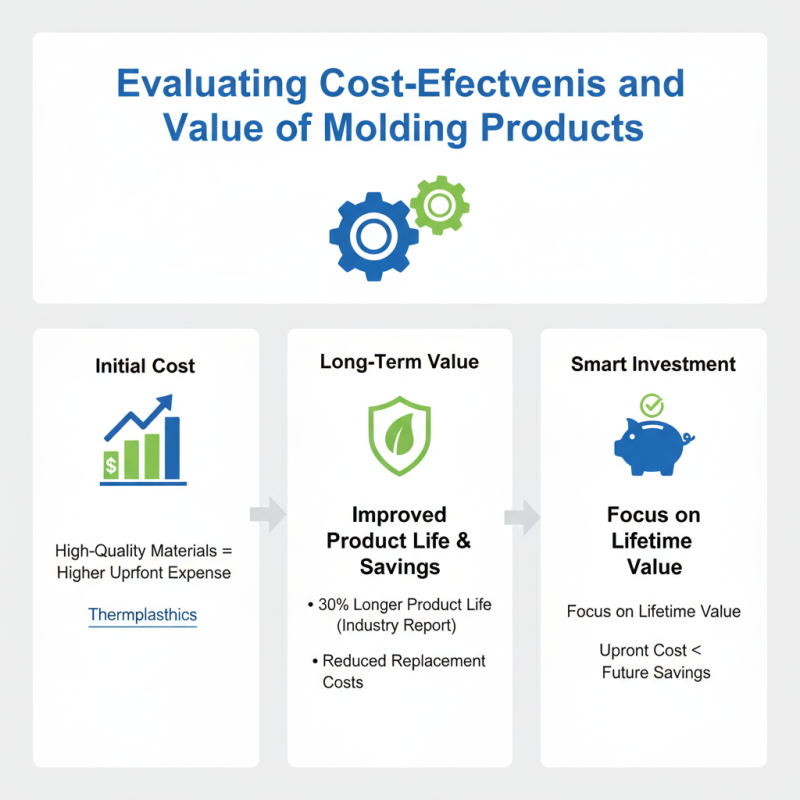
When evaluating the cost-effectiveness and value of molding products, several factors come into play. Quality materials often correlate with higher initial costs. According to an industry report, high-quality thermoplastics can improve product life by 30%. Investing in better materials can lead to reduced replacement costs over time. Thus, businesses should consider long-term savings alongside upfront expenses.
Labor costs are another significant factor. A study indicated that 42% of production costs stem from labor. Choosing molding products that require minimal setup and maintenance can significantly lower overall costs. Additionally, products designed for quick assembly not only save time but also increase productivity.
While cheaper alternatives may seem tempting, they can often lead to unsatisfactory results. Products that break down easily or fail to meet specifications can result in wasted resources. Evaluating supplier reputation and customer reviews becomes essential. Companies should seek out vendors with proven track records to ensure reliability. Balancing cost with quality and reliability is crucial for making informed purchasing decisions.
Reviewing Customer Feedback and Case Studies for Molding Products
When selecting quality molding products, customer feedback is invaluable. Reviews often highlight strengths and weaknesses that companies may not disclose. A recent industry report indicated that over 75% of businesses improved their processes by studying customer experiences. This evidence emphasizes the importance of listening to actual users.
Case studies also provide a wealth of information. They illustrate real-world applications and outcomes. Analyzing how other businesses succeeded or faced challenges with certain molding products can guide your decision-making. Furthermore, reports show that companies leveraging case studies tend to make more informed choices, leading to better performance in their own operations.
Tip: Always seek detailed reviews. Look for specific remarks on durability, efficiency, and usability. This helps in filtering out products that sound good but may not meet real-life standards. Engaging with communities on forums can unearth insights not found in official documentation.
Remember, not all feedback will be glowing. A few negative reviews can signal potential pitfalls. Collect a diverse range of opinions to get a balanced understanding of the product’s reliability.
Top Tips for Finding Quality Molding Products for Your Business
| Criteria |
Rating (Out of 5) |
Customer Feedback |
Case Study Summary |
| Material Quality |
4.5 |
Durable and long-lasting products. |
Used in automotive parts with impressive durability. |
| Customization Options |
4.0 |
Valued flexibility in design. |
Successfully created bespoke products for various clients. |
| Lead Time |
3.5 |
Could improve on delivery times. |
New strategies implemented to reduce delays. |
| Customer Support |
4.8 |
Responsive and helpful service. |
Helped resolve multiple client issues efficiently. |
| Cost Effectiveness |
4.2 |
Good value for the quality offered. |
Provided cost savings for a major project. |