Essential Tips to Optimize Molding Pressure for Better Manufacturing Efficiency
In the realm of manufacturing, optimizing molding pressure is a critical factor that significantly influences product quality and efficiency. According to Dr. Emily Carter, a renowned expert in polymer processing, "The right molding pressure not only enhances dimensional accuracy but also reduces cycle times, resulting in a more efficient manufacturing process." This insight underscores the importance of understanding and adjusting molding pressure to achieve optimal outcomes in production.
When manufacturers overlook the significance of molding pressure, they may encounter challenges such as defects, inconsistent quality, and increased waste. The delicate balance of applying the correct pressure ensures that materials flow properly into molds, which is essential for producing high-quality components. As industries become more competitive, the ability to fine-tune molding conditions, particularly pressure, is becoming a pivotal aspect of maintaining operational efficiency.
Through this exploration of essential tips to optimize molding pressure, we will dive into practical solutions and strategies that can help manufacturers improve their processes. By harnessing expert insights and best practices, companies can enhance their production capabilities while minimizing costs, ultimately leading to a more robust bottom line.
Understanding Molding Pressure and Its Role in Manufacturing Efficiency
Molding pressure plays a crucial role in the manufacturing process, significantly influencing the quality and efficiency of produced items.
The right molding pressure ensures that materials fill the mold cavities completely, reducing the likelihood of defects such as air pockets or incomplete shapes.
It is essential for manufacturers to understand the dynamics of molding pressure, as it affects not only the integrity of the final product but also the overall cycle time of the manufacturing process.
By optimizing pressure settings, manufacturers can enhance the material flow, minimize waste, and increase production rates.
Effective management of molding pressure also contributes to energy efficiency during the production cycle.
Each adjustment in pressure impacts the energy consumption of the machinery involved.
Striking the right balance reduces operational costs while maintaining product quality.
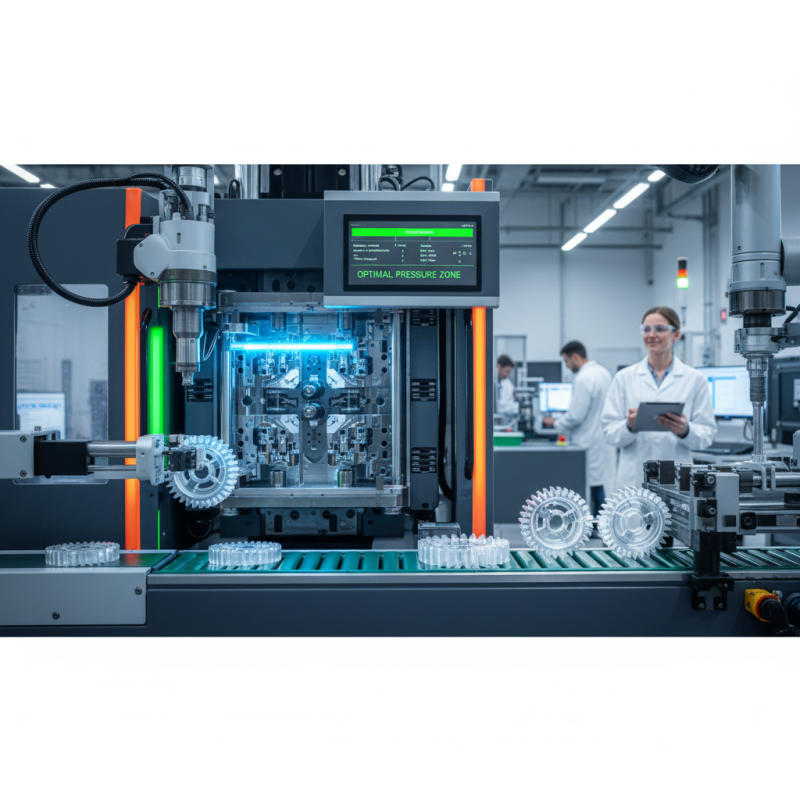
Manufacturers often utilize advanced monitoring systems to assess and regulate pressure in real-time, allowing for immediate adjustments that can lead to improved performance metrics.
Understanding the nuanced relationship between molding pressure and production efficiency empowers manufacturers to refine their techniques, ultimately fostering a more streamlined and cost-effective operation.
Key Factors Influencing Molding Pressure in Production Processes
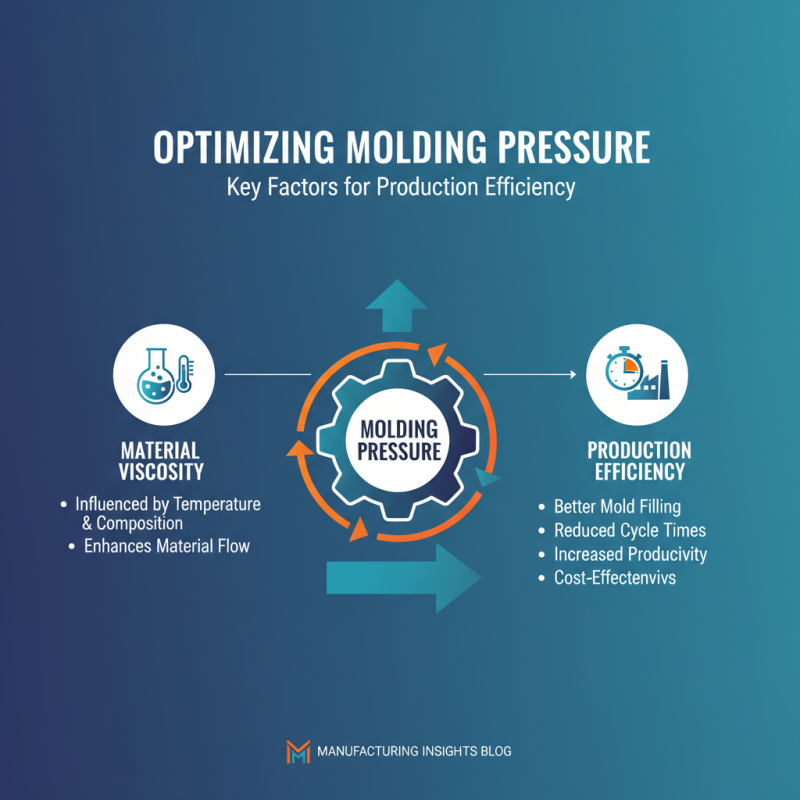
Molding pressure plays a crucial role in the efficiency of production processes, and several key factors can significantly influence it. One essential aspect to consider is the viscosity of the material being processed. According to a study by the Society of Manufacturing Engineers, optimal viscosity can enhance the flow characteristics of materials, allowing for better mold filling and reduced cycle times. This implies that maintaining the right temperature and composition of the material can directly affect the molding pressure required, leading to improvements in productivity and cost-effectiveness.
Another critical factor is the mold design itself. Research indicated that molds with better venting systems can facilitate air escape, reducing clamping pressure and improving the uniformity of pressure across the part being molded. The American Society of Plastics Engineers highlights that incorrect mold design can lead to inconsistent molding pressures, resulting in defects such as warpage or incomplete filling. Furthermore, the use of advanced simulation technologies in mold design can predict molding pressure variations and optimize designs before physical production, allowing manufacturers to devise solutions proactively. By understanding and controlling these factors, manufacturers can enhance their molding processes and push towards a more efficient production line.
Optimal Molding Pressure Settings: Industry Standards and Recommendations
Optimal molding pressure is critical to achieving high-quality production in the manufacturing sector. Industry standards suggest that the ideal pressure settings typically range from 5,000 to 30,000 psi, depending on material types and part specifications. Reports indicate that maintaining precise molding pressures not only reduces cycle times but also enhances the overall strength and durability of the molded products. For instance, a recent analysis demonstrated that improper pressure can lead to dimensional inaccuracies, resulting in increased scrap rates and higher production costs.
One of the essential tips for optimizing molding pressure is to conduct regular calibration of equipment to ensure accuracy. Fine-tuning the pressure settings based on real-time feedback can lead to improved consistency in product quality. Another recommendation is to consider material behavior under varying pressures. For thermoplastics, a lower pressure may be advantageous during the initial fill phase to prevent premature solidification, while higher pressure can be utilized to ensure complete cavity fill. These adjustments can significantly reduce the likelihood of defects such as air traps or short shots.
Additionally, incorporating advanced simulation software can help in predicting the effects of different molding pressures on the final product. This can facilitate more informed decision-making and allow for rapid adjustments during the production process. By following these guidelines and understanding the impact of pressure adjustments, manufacturers can achieve better efficiency and product quality in their molding operations.
Essential Tips to Optimize Molding Pressure for Better Manufacturing Efficiency
| Molding Process |
Optimal Pressure Range (psi) |
Material Type |
Cycle Time (seconds) |
Defect Rate (%) |
| Injection Molding |
900 - 1500 |
Polypropylene |
30 |
2.5 |
| Blow Molding |
500 - 1200 |
Polyethylene |
45 |
1.8 |
| Compression Molding |
700 - 1300 |
Rubber |
60 |
3.0 |
| Thermoforming |
200 - 400 |
Polystyrene |
25 |
1.2 |
| Rotational Molding |
300 - 800 |
Polyvinyl Chloride |
90 |
1.5 |
Impact of Molding Pressure on Cycle Time and Product Quality
Molding pressure plays a critical role in determining both the cycle time and the quality of the final product in manufacturing processes, especially in injection molding. According to a recent industry report from the Society of Plastics Engineers, optimizing molding pressure can reduce cycle time by up to 20%, allowing manufacturers to increase their throughput and better meet production demands. When the molding pressure is properly calibrated, the material fills the mold more effectively, minimizing voids and imperfections, which subsequently enhances product quality.
Furthermore, excessive or insufficient molding pressure can lead to significant issues. For instance, under low pressure conditions, the material may not fully occupy all mold cavities, resulting in incomplete parts and higher rejection rates. Conversely, too much pressure can cause flash, increased wear on molds, and even defects such as warping or sink marks. The American Society for Quality emphasizes that a meticulous balance in molding pressure not only enhances cycle efficiency but can also improve overall product consistency, with studies showing that optimal pressure settings can elevate product quality ratings by as much as 30%. As manufacturers seek to streamline operations and improve product fidelity, understanding the intricate relationship between molding pressure, cycle time, and product quality is essential.
Essential Tips to Optimize Molding Pressure for Better Manufacturing Efficiency
This chart illustrates the impact of different molding pressures on cycle time and product quality. A balance must be struck to ensure efficient manufacturing processes.
Advanced Techniques for Monitoring and Adjusting Molding Pressure
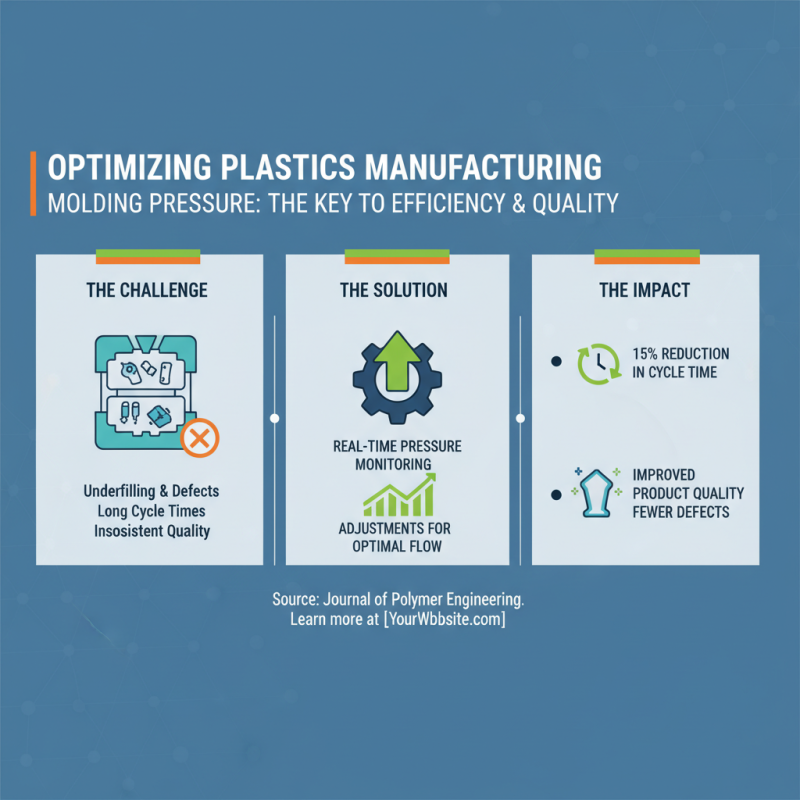
Monitoring and adjusting molding pressure is crucial in enhancing manufacturing efficiency in the plastics industry. Recent studies indicate that maintaining optimal molding pressure not only reduces cycle times but can also improve product quality significantly. For instance, a study published in the Journal of Polymer Engineering reported that an increase in molding pressure by just 10% could lead to a 15% reduction in cycle time while minimizing defects associated with underfilling and inconsistent part density. This emphasizes the need for manufacturers to adopt advanced techniques for real-time monitoring of molding pressure.
Implementing pressure sensors and data acquisition systems allows manufacturers to dynamically adjust molding parameters during production. By leveraging Internet of Things (IoT) technology, companies can collect and analyze data to identify trends and make informed decisions. According to the American Society of Mechanical Engineers (ASME), the integration of real-time monitoring systems has shown to enhance molding efficiency by up to 20%, allowing for quicker response times to fluctuations in pressure. Advanced control systems not only facilitate immediate adjustments but can also predict potential issues, leading to streamlined operations and reduced downtime—critical factors in today's competitive manufacturing landscape.