What is Mold Pressure and How Does It Affect Production?
Mold pressure plays a crucial role in the production of various plastic and metal parts. Understanding it can significantly impact the quality of the final product. When mold pressure increases, it can enhance material flow, leading to better mold filling. However, excessive mold pressure may create defects.
Many manufacturers struggle with optimizing mold pressure. Finding the right balance can be challenging. Too low pressure can cause incomplete fills, while too high can lead to warping or cracks. The pressure affects not just quality but also cycle time and efficiency in production processes.
As production lines evolve, mold pressure management requires constant reflection. It is important to monitor the process regularly. Small adjustments may yield significant improvements. Diligent tracking can reveal issues that may not be immediately visible. In this dynamic environment, mold pressure remains a fundamental factor in achieving optimal results.
What is Mold Pressure in Manufacturing Processes?
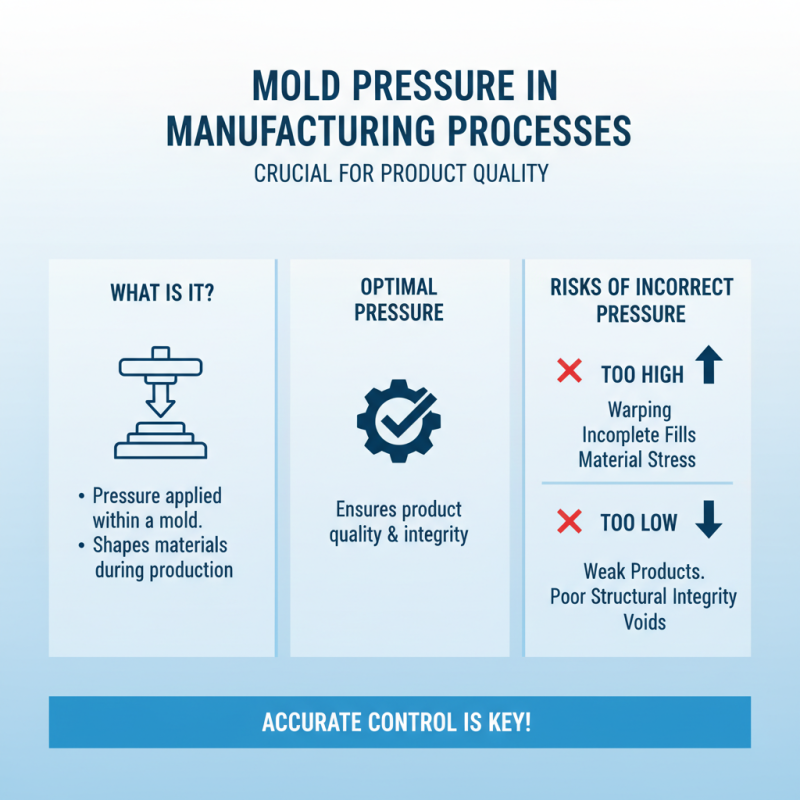
Mold pressure plays a crucial role in manufacturing processes. It refers to the pressure applied within a mold to shape materials during production. Accurate mold pressure is vital for ensuring product quality. High pressures can lead to defects like warping or incomplete fills. Low pressures may result in weak products, compromising structural integrity.
A study from the Society of Plastics Engineers indicates that optimal mold pressure can enhance cycle times by 20%. Maintaining this pressure is not always easy. Variations due to temperature or material inconsistencies can impact results. Manufacturers often need to adjust settings, which can lead to increased downtime and wasted materials. Regular calibration is essential.
Moreover, many factories struggle with consistent mold pressure monitoring. A report from the Plastics Industry Association highlights that nearly 30% of manufacturers do not use adequate pressure control systems. This lack of attention can cause severe production hiccups. Understanding and controlling mold pressure can significantly improve overall efficiency and product reliability in manufacturing.
The Importance of Mold Pressure in Injection Molding
Mold pressure plays a crucial role in the injection molding process. It refers to the force exerted by the molten material as it fills the mold cavity. Proper mold pressure ensures smooth filling and reduces defects. When the pressure is too low, the mold may not fill completely, leading to weak parts. On the other hand, excessive pressure can cause flash and warpage. Balancing these forces is essential for quality production.
The importance of mold pressure also extends to cycle time. Higher mold pressure can speed up the filling process. However, it may require longer cooling times, which can affect overall productivity. Decision-makers need to consider these trade-offs. What works for one material may not work for another. It’s a complex dance of variables that requires reflection and adjustment.
Inadequate monitoring of mold pressure can lead to inconsistent results. Regular maintenance of equipment and calibration is vital. Minor discrepancies can cause significant production issues. Learning to manage mold pressure effectively is an ongoing challenge in the industry. Achieving the right balance is often a trial-and-error process. Attention to detail can make all the difference.
Mold Pressure Impact on Production Rate
This chart illustrates the relationship between mold pressure and production rate in injection molding. As mold pressure increases, production rates typically improve, demonstrating the importance of optimizing this parameter for efficient manufacturing.
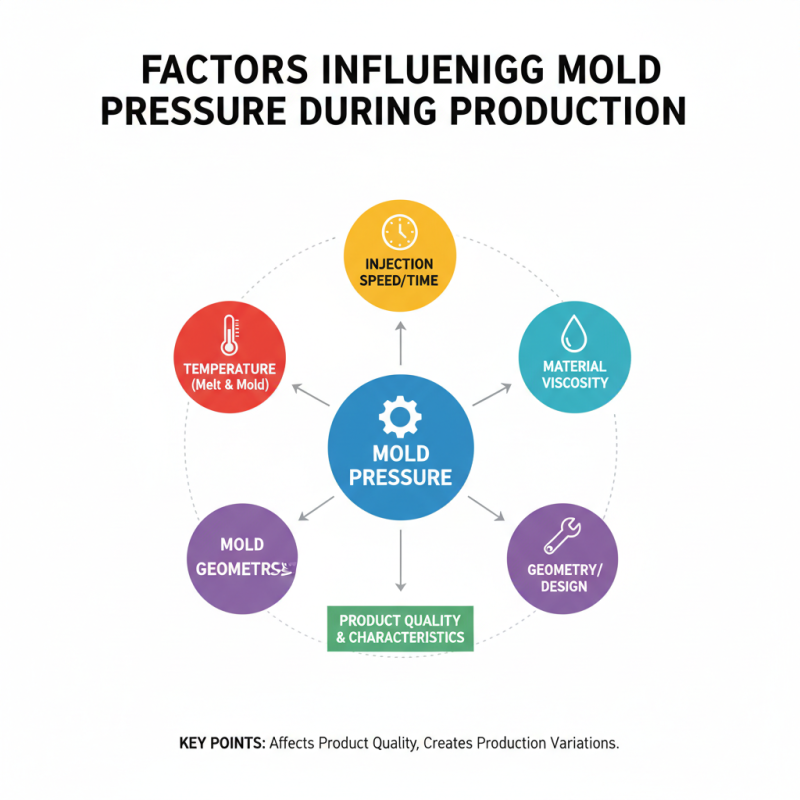
Factors Influencing Mold Pressure During Production
Mold pressure plays a crucial role in the manufacturing process. It directly affects the quality and characteristics of the final product. Several factors influence this pressure, creating variations in the production cycle.
Temperature is a key factor. When temperatures rise, the material fluidity increases. This change can lead to lower mold pressure. On the other hand, if the temperature is too low, the material may not fill the mold properly. The complexity of mold design also adds another layer of challenge. Intricate designs can trap air, impacting pressure levels during injection.
Material viscosity is another significant influence. Thicker materials tend to require higher mold pressure for proper flow. However, in some cases, this can lead to defects or incomplete parts. Operators must regularly adjust settings for optimal performance. Inconsistent pressure can create weak points in the final product. This ongoing balancing act often requires reflection and adjustment throughout the production process.
The Effects of Mold Pressure on Product Quality and Consistency
Mold pressure plays a crucial role in determining product quality. High mold pressure can lead to better material flow, resulting in fewer defects. It helps in filling every nook and cranny of the mold. However, excessive pressure can create problems. Parts may warp or develop unwanted stress points. This is not ideal for consistency.
Consistent mold pressure ensures uniformity in production. Variations can lead to inconsistent wall thickness. This inconsistency affects the strength of the final product. A delicate balance must be maintained. Too little pressure may cause incomplete filling. Workers need to monitor these levels closely. Regular adjustments might be necessary.
In practice, achieving the right mold pressure is often a trial-and-error process. There are always factors that can influence the outcome. Temperature changes, material viscosity, and machine settings all play a part. A careful analysis of these variables can improve results. The learning curve can be steep. Mistakes may occur, but they provide valuable insights for future runs. Adjustments should always be made with caution.
What is Mold Pressure and How Does It Affect Production?
| Mold Pressure (psi) |
Product Quality Rating |
Production Consistency (%) |
Defect Rate (%) |
| 2000 |
4.5 |
95 |
2 |
| 2500 |
4.7 |
97 |
1.5 |
| 3000 |
4.8 |
98 |
1 |
| 3500 |
4.6 |
96 |
1.8 |
| 4000 |
4.4 |
94 |
2.5 |
Techniques to Optimize Mold Pressure for Improved Production Efficiency
Mold pressure plays a crucial role in production efficiency. Proper management of this pressure can lead to significant improvements in quality and productivity. Industry reports indicate that optimized mold pressure can increase production rates by 20-30%. However, improper settings can lead to defects and waste.
To optimize mold pressure, regular monitoring is essential. Use pressure transducers that provide real-time data. This allows for immediate adjustments. Aim for a pressure range that aligns with your material properties. Many experts recommend starting with a lower pressure and gradually increasing.
**Tip:** Conduct periodic tests to determine the best settings for your molds. This practice can reveal inconsistencies in production. Standard deviation analysis can highlight outliers in your data. Such insights are invaluable.
Lastly, evaluating mold design can enhance pressure management. Consider the gate size and placement. A well-designed mold distributes pressure evenly. Significantly, this can reduce cycle times and improve output. Yet, remember, the ideal pressure is not one-size-fits-all. Regular review of your processes is necessary.