What is Cold Rolled Coil and How is it Used?
Cold Rolled Coil is a vital component in various industries, known for its precision and versatility. Jack Thompson, a leading expert in metal processing, once stated, "Cold Rolled Coil is the backbone of modern manufacturing." This highlights its importance in diverse applications, from automotive to construction.
Manufacturers appreciate the smooth finish and tight tolerances of Cold Rolled Coil. These characteristics make it ideal for products requiring superior surface quality. Yet, the production process is not without its flaws. Some coils may exhibit surface imperfections or inconsistent thickness. Such issues can impact downstream applications.
The evolution of Cold Rolled Coil technology continues to shape the industry. Innovations aim to enhance quality and efficiency. However, challenges remain in achieving perfect consistency. As manufacturers strive for improvement, the focus often shifts to balancing cost and quality. The journey of Cold Rolled Coil is one of both advancement and reflection.
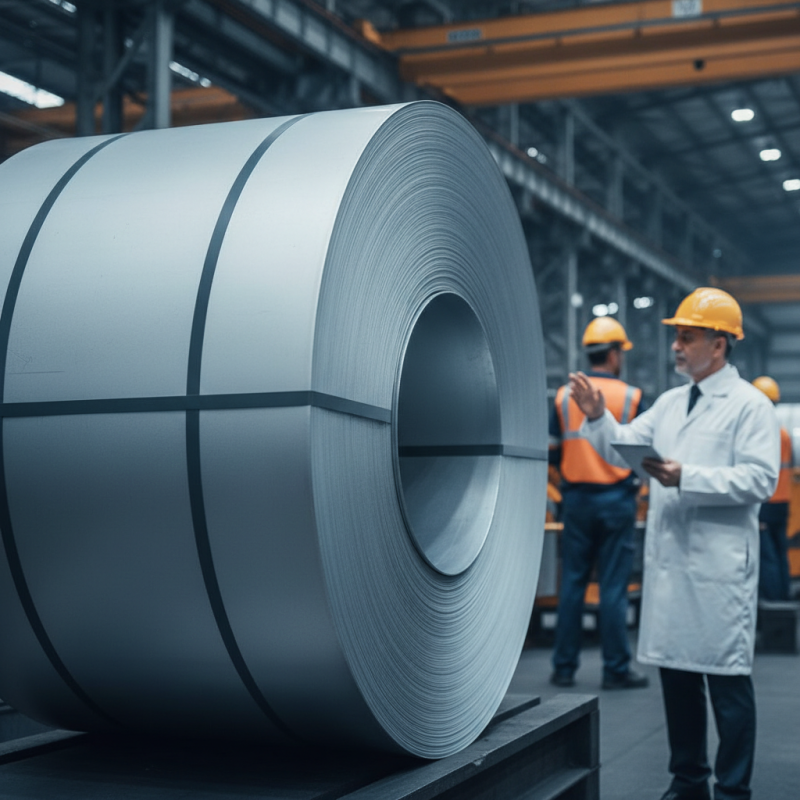
What is Cold Rolled Coil: Definition and Characteristics
Cold rolled coil (CRC) is a type of steel product known for its fine surface finish and precise dimensions. This process involves rolling the steel at room temperature, which enhances its strength and hardness. The end result is a versatile material that finds application in many industries.
One key characteristic of cold rolled coil is its ability to hold tight tolerances. This means the thickness, width, and flatness are consistent throughout the length of the coil. Manufacturers often prefer CRC for products requiring high accuracy. Another important trait is its smooth surface, making it ideal for processes like painting or coating.
Tips: When choosing cold rolled coil, consider the thickness required for your project. Thinner coils may bend more easily, while thicker ones offer greater structural integrity. Ensure you're aware of the specifications that suit your needs best.
Cold rolled coil does have some imperfections. Blemishes or minor defects can appear during production. These issues may require reevaluation of your selection criteria. Always inspect the material closely before use to avoid complications down the line. This diligence ensures that the final product meets quality standards.
The Manufacturing Process of Cold Rolled Coil: Step-by-Step Overview
Cold rolled coil (CRC) is an essential product in the metal industry. Its manufacturing process involves a series of steps that transform hot rolled steel into a refined and uniform product. Initially, hot rolled steel sheets are pickled. This process removes oxides and impurities. After pickling, the sheets are cold reduced. This significantly lowers their thickness and improves surface quality.
During the cold reduction stage, the steel is passed through several rollers. Each pass reduces the thickness by a few millimeters. This method enhances mechanical properties, including strength and smoothness. In fact, cold rolled steel offers up to 20% greater tensile strength compared to its hot rolled counterpart. The final step involves annealing, which softens the steel and relieves stress. This creates a product that is easy to work with for various applications.
Cold rolled coil is widely used in industries like automotive, construction, and appliances. For instance, around 50% of cold rolled steel is utilized in automotive manufacturing. However, inconsistencies can arise in thickness and surface finish, prompting manufacturers to continually refine their processes. Quality control measures must be stringent, as any defects can lead to issues downstream. Understanding these nuances is crucial for anyone involved in the production chain.
Key Applications of Cold Rolled Coil in Various Industries
Cold rolled coil (CRC) is a crucial component in various industries due to its versatility and strength. This steel product is created through a process that cools the metal after hot rolling, enhancing its surface finish and dimensional accuracy. It's popularly used in construction, automotive, and appliances. In fact, the automotive industry consumes around 40% of all cold rolled steel output, indicating its essential role in vehicle manufacturing.
In construction, cold rolled coil is key in producing structural components. Builders prefer CRC for its strength-to-weight ratio. Reports state that global demand for cold rolled products is predicted to grow significantly, driven by the expansion in the construction sector. It’s worth noting that while CRC offers many advantages, it can be prone to rust if not properly coated.
Furthermore, the appliance industry utilizes CRC for manufacturing parts like frames and panels. Most households have appliances made from this material. However, as the market evolves, the environmental impact of CRC production raises concerns. Recycling initiatives are still in early stages, requiring more focus. Balancing demand with sustainability efforts is a challenge that deserves attention.
What is Cold Rolled Coil and How is it Used? - Key Applications of Cold Rolled Coil in Various Industries
| Application Industry | Key Uses | Material Properties | Benefits |
| Automotive | Body panels, chassis components | High strength, excellent surface finish | Improves fuel efficiency, reduces weight |
| Construction | Structural support, framing | Durable, easy to fabricate | Cost-effective, reliable performance |
| Electronics | Components for appliances, circuit boards | Precision dimensions, good conductivity | Enhances electronic efficiency, compact design |
| Appliance Manufacturing | Inner and outer casings, structural parts | Smooth surface, corrosion resistance | Visually appealing, reduces maintenance |
| Furniture | Metal frames, decorative elements | Varied thicknesses, aesthetic versatility | Durability, design flexibility |
Comparative Analysis: Cold Rolled vs. Hot Rolled Steel Coils
Cold rolled steel coils and hot rolled steel coils have different characteristics and applications. Cold rolled coils are processed at room temperature, which increases their strength and offers a smooth finish. This makes them ideal for products requiring precise dimensions.
On the other hand, hot rolled coils are made by heating the steel above its recrystallization temperature. They are easier to shape and form, but the finish is rougher. With hot rolling, the internal stresses are higher, which can lead to warping or dimensional inaccuracies. This is a significant drawback in applications demanding strict specifications.
In many industries, the choice between cold and hot rolled coils depends on their intended use. For instance, automotive and appliance manufacturing often prefer cold rolled steel for its aesthetic appeal and superior surface quality. Yet, the cost often pushes designers to consider hot rolled options for less visible components. Thus, the decision can involve careful consideration of both cost and performance, particularly in tight project budgets.
Industry Trends and Market Insights for Cold Rolled Coil Demand
Cold rolled coil (CRC) is gaining traction in various industries. Its smooth surface and precise dimensions meet strict requirements. This material is widely used for automotive parts, appliances, and construction projects. The demand for CRC is rising due to its applications in producing strong, lightweight components.
Industry trends highlight a shift towards lightweight materials. Manufacturers are seeking ways to improve efficiency. Steel is essential in this pursuit, and CRC stands out due to its flexibility. However, some challenges exist. Production costs can fluctuate, which affects overall pricing. Companies must stay informed about market dynamics.
Tips: Monitor raw material prices. Understand how fluctuations impact CRC costs. Diversifying suppliers may help reduce risks. Adaptation is crucial for staying competitive in this fast-evolving market. Companies should continuously assess their needs and adjust strategies accordingly. Success often relies on foresight and the ability to pivot.
Cold Rolled Coil Demand Trends (2022-2023)
