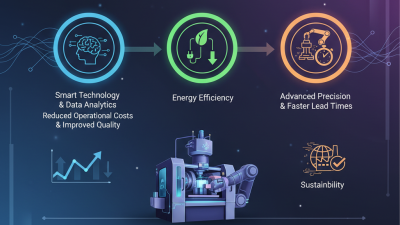
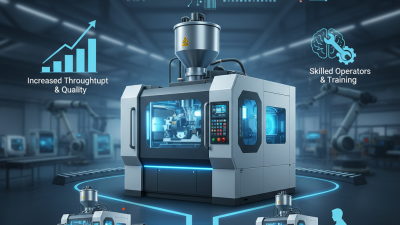
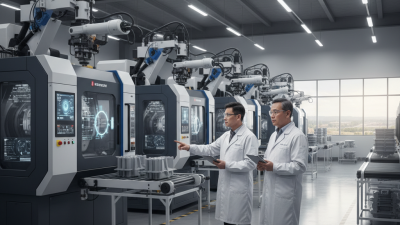
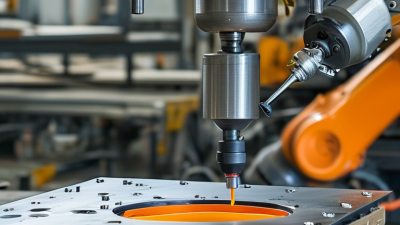
Choosing the right machine injection system is a production decision, not merely an equipment purchase. It affects part quality, energy use, maintenance time, and future capacity. A press may look affordable on paper, yet become expensive when cycle instability, oversized motors, or limited technical support appear.
The Plastics Industry Association’s 2024 Size and Impact Report shows that the United States plastics industry supports more than 1.5 million jobs and generates over $600 billion in shipments. Such scale demands dependable equipment and measurable process control. Meanwhile, the International Energy Agency continues to identify industrial efficiency as a major pathway for reducing energy consumption. These findings make energy-efficient drives, accurate servo systems, and reliable monitoring increasingly important for injection molding buyers.
“Quality cannot be inspected into a part; it must be molded into it,” says John Bozzelli, founder of Scientific Molding. His statement captures the central selection challenge. Clamping force, injection speed, screw design, shot size, mold dimensions, and material behavior must work together. A larger machine is not automatically better. Sometimes, it only hides poor calculations.
Buyers should compare tested cycle data, not impressive brochures. Ask for repeatability results. Examine service response times, spare-part availability, controller usability, and total energy consumption. A machine injection solution should fit today’s mold and tomorrow’s product mix. That prediction may be imperfect. It still deserves careful review, because changing machines after installation is costly, disruptive, and rarely simple.
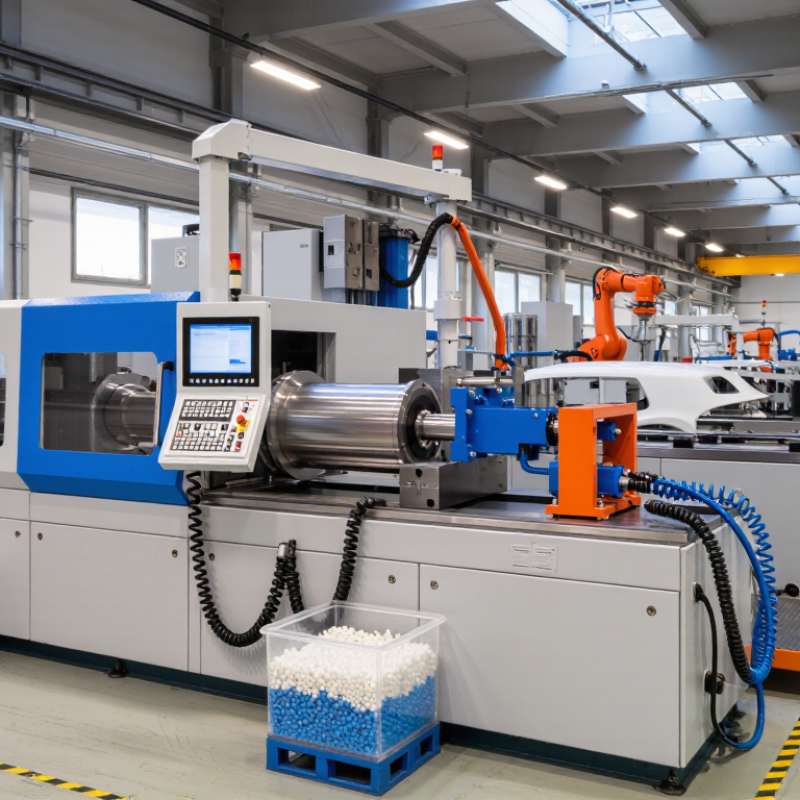
Machine selection should begin with the part, not the machine catalog. Record the resin grade, fillers, melt temperature, drying needs, shrinkage, and flow behavior. A glass-filled polymer may require different screw wear resistance and pressure than an unfilled resin. Check the material data sheet, then confirm its values through a controlled trial.
Volume changes the decision. Estimate annual demand, target cycle time, cavity count, and expected downtime. A small part made in high volume may need a multi-cavity mold and faster automation. A low-volume part may not justify that investment. I have seen teams select machines from peak demand alone, leaving equipment underused for most of the year.
Shot size must include the part, runners, and sprue. Keep the planned shot within a stable operating range, rather than near the machine limit. Leave enough cushion for consistent packing. Small details matter. Tolerance requires more than machine accuracy. Mold condition, cooling balance, material moisture, and process repeatability also affect dimensions. A tolerance of ±0.05 mm may be realistic for one feature, but unrealistic across a large molded surface. A neat calculation can still mislead. Measure actual parts, review capability data, and allow room for process variation before approving the machine size.
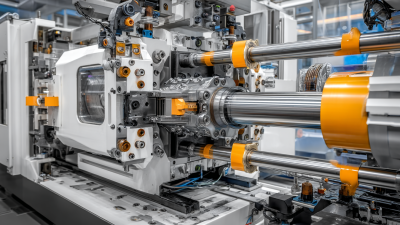
How to Choose the Right Injection Molding Machine?
Clamping force starts with projected area, not part weight. Project the cavity and runner system onto the mold’s parting line. Include every cavity. Ignore the mold’s overall footprint.
A practical estimate uses 2–5 tons per square inch of projected area. A 40-square-inch projection may require 80–200 tons. For a balanced starting point, use 3 tons per square inch. That equals 120 tons before adding a safety margin. Many engineers add 10–20% for pressure variation, material behavior, and process changes. The final estimate becomes 132–144 tons.
Keep the details visible. A thin-wall part with high injection pressure may need more force. A deep mold can also increase risk. Glass-filled materials may behave differently from ordinary plastics. Check the machine’s real clamping force, not only its advertised maximum. I have seen molds run near their limit, then develop flash after temperature changes. That result was preventable, but the original calculation looked reasonable. Mold trials still matter.
Measure carefully. Small errors grow quickly across multiple cavities. If the projected area is uncertain, calculate the high and low values. Then compare them with machine capacity, tie-bar spacing, mold thickness, and shot size. A machine that closes safely may still produce unstable parts. Allow room for adjustment. It is easy to overestimate force, yet underestimating it can damage tooling.
| Projected Area (in²) | Estimated Clamp Force at 2–5 tons/in² | Illustrative Machine Size | Selection Considerations |
|---|---|---|---|
| 10 | 20–50 tons | Approximately 50-ton class | Check that the mold fits between the tie bars and within the platen dimensions. |
| 25 | 50–125 tons | Approximately 125-ton class | Allow for process variation and confirm that the machine can supply the required injection pressure. |
| 50 | 100–250 tons | Approximately 250-ton class | Verify mold height, opening stroke, and ejector stroke in addition to clamp force. |
| 100 | 200–500 tons | Approximately 500-ton class | Consider the number of cavities, part geometry, material, and expected molding pressure. |
| 200 | 400–1,000 tons | Approximately 1,000-ton class | Confirm platen load capacity, mold support, and the machine’s available shot capacity. |
| 400 | 800–2,000 tons | Approximately 2,000-ton class | Review machine specifications and mold handling requirements with the equipment supplier. |
Calculation: Estimated clamping force (tons) = total projected area (in²) × clamp-force factor (tons/in²). Projected area includes the parts and runner system as viewed in the direction of mold opening. The 2–5 tons/in² range is a preliminary estimating guideline, not a universal setting; the appropriate factor depends on resin, part design, flow length, and process conditions. Validate the estimate with the mold designer and machine supplier.
How to Choose the Right Injection Molding Machine?
Match Injection Capacity to 20–80% of the Machine’s Rated Shot Size
Choose a machine whose rated shot size keeps your actual shot between 20% and 80% of capacity. Plastics Technology’s injection-molding guidance describes this range as a practical target for consistent processing. A 500-gram-rated machine, for example, is generally better suited to shots of about 100–400 grams. Include the runner system in your estimate, not just the finished parts. A 90-gram part with a 30-gram runner needs a 120-gram shot, or 24% of that machine’s rating.
Operating too close to the lower limit can make shot control and melt residence time harder to manage. At the upper limit, there may be little room for process variation or material changes. The exact result depends on resin, screw design, and the machine’s actual performance, so treat the percentage as a selection guide, not a guarantee. A mold trial may reveal that your first calculation was optimistic.
Tips: Confirm shot weight using production parts and runners. Ask the supplier how rated capacity was measured, especially if it is stated in polystyrene-equivalent grams. Keep a small buffer for process adjustments, but avoid choosing a machine so large that your normal shot falls below 20%.
Match the required injection capacity to approximately 20–80% of the machine’s rated shot size.
The shaded operating range represents 20–80% of each machine’s rated shot size. Selecting a machine within this range helps avoid operating consistently below the recommended utilization level while preserving capacity for process variation, material differences, and production adjustments.
Choosing an injection molding machine starts with the parts you make and how steadily you make them. Hydraulic machines deliver strong clamping force and handle demanding applications well. Their pumps may consume more energy, especially when the machine waits between cycles. A variable-speed pump can reduce that waste, but performance depends on setup and maintenance. Listen for changes in pump noise; they can signal wear, though sound alone is not a diagnosis.
Electric machines use servo-driven movements and often draw less energy during pauses. They can also offer repeatable control of injection speed and screw position, useful for thin walls or tight dimensions. In production, that precision still depends on material drying, mold condition, and process settings. A precise machine cannot correct every upstream problem. Small variations matter.
Hybrid machines combine hydraulic power for selected movements with electric drives for others. This can balance clamping force, energy use, and motion control. The actual savings vary with cycle time, shot size, and idle periods, so compare measured energy per part rather than brochure figures. Run representative molds if possible. Record cycle time, scrap, and power use over several shifts. The comparison may expose an awkward trade-off: the lowest-energy option might not deliver the throughput your schedule needs.
When comparing injection molding machines, assess cycle time using your actual part, resin, and mold—not a supplier’s best-case figure. Cooling often dominates the cycle, so measure it with a production-intent mold and confirm stable part dimensions across repeated shots. Even a small cycle-time error adds up over a full shift. Ask for the test conditions behind every quoted number.
Automation and maintenance affect whether that cycle time holds on the factory floor. Deloitte’s 2024 manufacturing outlook reports that 86% of surveyed executives see smart manufacturing as a driver of competitiveness within five years. For a molding cell, that can mean robot part removal, simple alarms, and process data operators can act on. Keep access to filters, heaters, and hydraulic components clear; a fast machine is less useful when routine service becomes a long stoppage. I have seen plans overlook this detail.
Size the machine for the largest expected shot and mold, then retain a 10–15% capacity reserve for normal variation and future work. Treat that reserve as a planning allowance, not a substitute for checking clamp force, tie-bar spacing, and shot capacity with the mold maker. Too little headroom can force a costly replacement; too much may raise purchase and operating costs. Document assumptions, especially if the part mix is still changing.