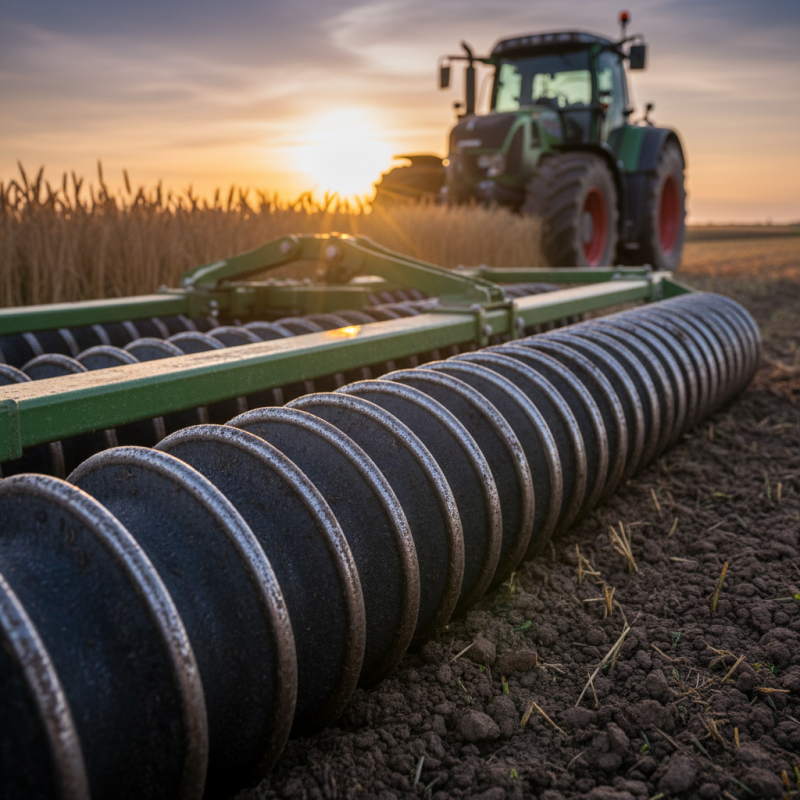
How to Choose the Right Claas Needle Roller for Your Needs?
Choosing the right Claas Needle Roller can significantly impact your farming tasks. It’s not just about picking a roller; it’s about finding one that meets your specific needs. With various options available, the decision can feel overwhelming.
When selecting a Claas Needle Roller, consider your agricultural requirements. Think about the type of crops you grow and the terrain you work with. A roller that performs well in one scenario may not excel in another. It’s essential to assess how different models will affect your efficiency and productivity.
Reflect on your past experiences. Have you faced issues with maintenance or performance? These insights can guide your choice. Discovering the right Claas Needle Roller involves more than just prices and specifications. It demands careful thought and sometimes, trial and error.
Understanding Claas Needle Rollers and Their Uses
Claas needle rollers are essential tools in agriculture and engineering. These rollers reduce friction between surfaces. They support heavy loads and improve performance. Understanding how they work is crucial for making the right choice.
These rollers come in various sizes and materials. Selecting the appropriate type depends on your equipment and operational conditions. Consider the weight and speed of your machinery. Too heavy a roller might not perform well in lighter applications. It's key to assess your specific needs.
**Tip**: Always check the manufacturer's specifications. This ensures you choose a roller that matches your equipment requirements. Additionally, consider the environment where the roller will be used. If it's exposed to moisture or dust, select a roller made from durable materials.
Remember, not every roller fits all applications. Some users may find a type that looks perfect but fails in practice. Testing different options can lead to valuable insights. Each use case offers lessons, and adjustments may be necessary as conditions change.
Understanding the Benefits of Different Claas Needle Rollers
Key Factors to Consider When Choosing a Needle Roller
Choosing the right needle roller involves several key factors. First, consider the application requirements. Different jobs call for different specifications. How much weight can the roller handle? What's the environment like? These details matter a lot.
Next, look at the size and dimensions. Measure the space in which you plan to use the roller. Ensure it fits snugly but not too tight. A roller that’s too small can lead to failure. A roller that’s too large creates unnecessary friction. This balance requires careful thought.
It's also vital to think about material. Some materials offer greater durability under stress. Others might provide better flexibility. Each choice comes with its pros and cons. Testing is often needed to find the right fit. Don't hesitate to experiment, even if it feels risky. This process may reveal unexpected solutions.
Different Types of Claas Needle Rollers Available
When selecting a needle roller, understanding the types available is crucial. Each type serves unique purposes and has specific features. Commonly, there are several variations: solid needle rollers, drawn cup rollers, and caged rollers. Solid needle rollers have a simple design. They offer high load capacity and can be effective in high-speed applications.
On the other hand, drawn cup needle rollers are encapsulated within a cup. Their design protects the needles and enhances durability. These rollers minimize friction, which is critical in many machines. Caged needle rollers, featuring a cage that holds the needles in place, can prevent unwanted movement. This can improve performance and precision.
Choosing the right type is not always straightforward. It's vital to assess your specific needs. Factors like load and speed will affect your decision. Think about where the roller will be used. The environment can also play a role. Sometimes, a roller might seem suitable but doesn’t perform well under certain conditions. It's important to reflect on these details before making a final choice.
Evaluating Compatibility with Your Equipment
When choosing a needle roller, compatibility is key. Not every roller fits with every piece of equipment. Improper fit can lead to inefficiency. Understanding your machinery's specifications is crucial.
**Tips:** Always check the manufacturer’s guidelines for your equipment. This will save you time and money. Do not assume that all needle rollers are the same.
Consider the dimensions and the load capacity of the roller. Ensure the roller's diameter and width align with your requirements. Use a digital caliper for precision. Take the time to measure. A small oversight can lead to performance issues.
**Tips:** Try to consult with a professional before making your purchase. Don’t overlook this step; it can make a significant difference. Also, seeking advice can provide insights you may not have considered. Doing your homework will help you avoid costly mistakes.
Maintenance Tips for Optimizing Roller Performance
Maintaining your needle roller can significantly enhance its performance and longevity. Regular inspection is key. Look for signs of wear and tear. A simple check can prevent bigger issues later. Noise during operation? It might be time to assess the roller’s condition.
Here are some tips for optimal maintenance.
- Clean the roller regularly. Dust and debris can accumulate. Use a soft cloth to wipe it down.
- Lubrication is vital.
- Ensure you apply the correct lubricant as specified. Too little or too much can lead to failure.
Also, monitor the operating environment. High temperatures can impact performance. Ensure proper ventilation around the machine. Consider checking alignment and tension periodically. Misalignment can cause uneven wear. Remember, even minor adjustments can lead to better efficiency.