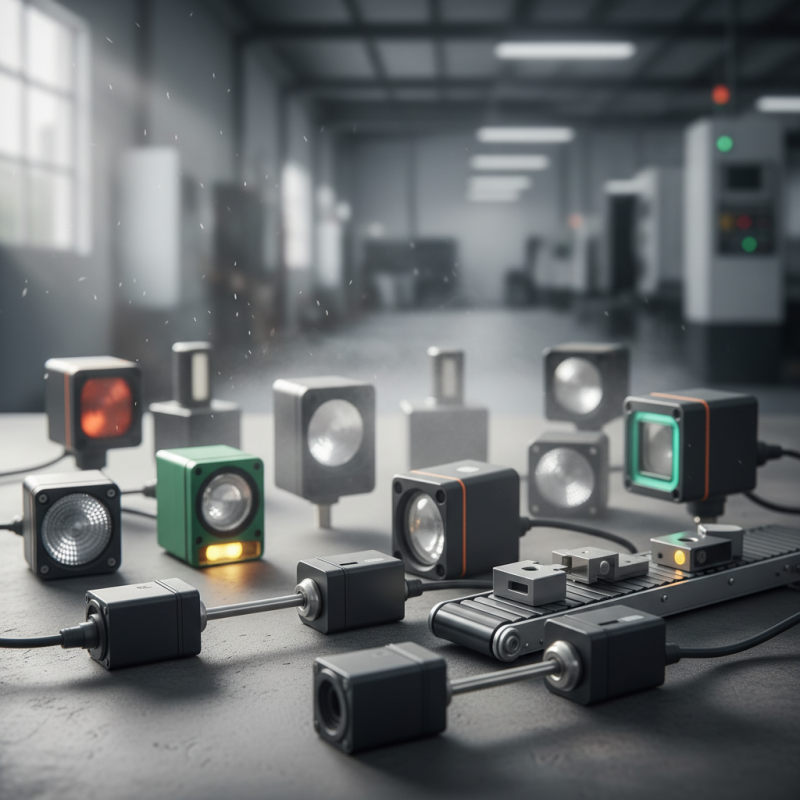
How to Choose the Right Photoelectric Sensors for Your Needs?
Choosing the right Photoelectric Sensors for your specific needs can be challenging. These sensors are vital in automation and industrial applications. They detect objects without direct contact. Knowing the right type is essential.
Different types of Photoelectric Sensors exist, each with unique features. Reflective sensors work well in simple detection tasks. Through-beam sensors offer higher accuracy over longer distances. Choosing the wrong type may lead to inefficient operations or errors.
It is important to consider your specific environment. Factors like dust, moisture, and lighting can greatly affect sensor performance. Do not overlook the details. Each application has nuances that can impact sensor effectiveness. Reflecting on these points allows for better decision-making.
Understanding the Basics of Photoelectric Sensors
Photoelectric sensors play a crucial role in automation and safety applications. Understanding their basics can help you make informed choices. These devices use light to detect objects and measure distances. They excel in environments where mechanical sensors might fail. For instance, in dusty or wet conditions, photoelectric sensors remain reliable.
There are several types of photoelectric sensors. These include through-beam, retro-reflective, and diffuse sensors. Each type has its unique features and applications. For instance, through-beam sensors provide a clear detection range. They are ideal for long distances and can detect small objects. However, they require precise alignment, which can be challenging.
Choosing the right sensor can seem overwhelming. You must consider factors like detection range, target size, and ambient light conditions. Reflect on the specific needs of your application. For example, if you need to detect objects in varying distances, a retro-reflective sensor may not be suitable. A careful evaluation will help you avoid making costly mistakes in your selection.
Types of Photoelectric Sensors and Their Applications
Photoelectric sensors are crucial in automation. They detect objects and measure distances without physical contact. Understanding the different types can guide your choice.
There are three main types of photoelectric sensors: through-beam, retro-reflective, and diffuse. Through-beam sensors emit a beam of light from a sender to a receiver. They can detect objects placed between them. Retro-reflective sensors use a reflector. The light beam bounces back to the sensor when it hits an object. Lastly, diffuse sensors project a beam that reflects off the object itself. Each type has specific applications, like packaging or conveyor systems.
Choosing the right type is not always straightforward. Consider the environment of operation. Dust or moisture can interfere with sensor performance. Sometimes, a sensor might work in one scenario but fail in another. User error in installation can also impact functionalities. Testing sensors in real conditions can reveal their true performance. Don't overlook these factors when making your decision.
Key Factors to Consider When Selecting a Photoelectric Sensor
Choosing the right photoelectric sensor can be challenging. It requires a clear understanding of various factors. Application requirements are critical. You must assess distance, sensing mode, and environmental conditions.
Distance plays a major role. Report data indicates that over 70% of sensor failures come from improper distance selection. Sensors need to detect objects within a specified range. Then there's the sensing mode. Through-beam, retro-reflective, and diffused modes cater to different applications. Each mode has unique benefits and limitations.
Environmental factors matter too. Sensors must withstand conditions like temperature extremes or dust. Some reports suggest that 25% of installations fail due to inadequate environmental considerations. Such failures can lead to costly downtime. Ensure sensor specifications match your working environment. Analyzing these aspects helps avoid potential pitfalls.
Evaluating Technical Specifications for Your Needs
When selecting photoelectric sensors, evaluating technical specifications is crucial. One key metric is sensing range. Many sensors operate effectively within 0.1 to 10 meters. For instance, a report by the International Society of Automation indicates that accurate sensing within this range can lead to a 20% improvement in automation efficiency.
It's also important to consider the environmental conditions where the sensor will be used. Sensors designed for extreme temperatures often have specialized housing. They can tolerate conditions ranging from -30°C to +85°C. Choosing the wrong type can lead to system failures.
Tip: Always match the sensor's IP rating to the installation environment. This can prevent costly damage.
Another vital specification is response time. A typical response time can be as fast as 1 millisecond. However, some applications may require even quicker reactions. If you're in a fast-paced production line, every millisecond counts.
Tip: Test sensors under real conditions before full deployment. Sometimes, factory readings don't reflect actual performance.
Carefully analyzing these specifications can streamline your selection process. Be aware that not all features are necessary for every application. It's essential to determine which technical aspects are critical for your specific needs.
Common Mistakes to Avoid When Choosing Photoelectric Sensors
Choosing the right photoelectric sensors can be tricky. Many overlook essential details that lead to poor decisions. A common mistake is not considering the environment. Sensors in dusty or wet locations need specific protection levels. Without this consideration, they may fail or give inaccurate readings.
Another mistake is ignoring the sensing range. It varies widely among sensors. If you need to detect objects at a distance, ensure the chosen sensor meets this requirement. Sometimes, users select a sensor based on features rather than actual needs. This can lead to overspending or choosing functions that won't be utilized.
Tips: Always assess your application carefully. Determine the specific requirements like distance and environment. Don't rush your decision. Take time to understand your options. A wrong choice can mean costly replacements. Engaging with professionals or knowledgeable peers can also provide valuable insights.