How to Choose the Right 180 Rotation Rotary Actuator?
Choosing the right 180 Rotation Rotary Actuator is crucial for ensuring optimal performance in various applications. Many industries rely on this device for precise movements and control. However, understanding the different types and specifications can be overwhelming.
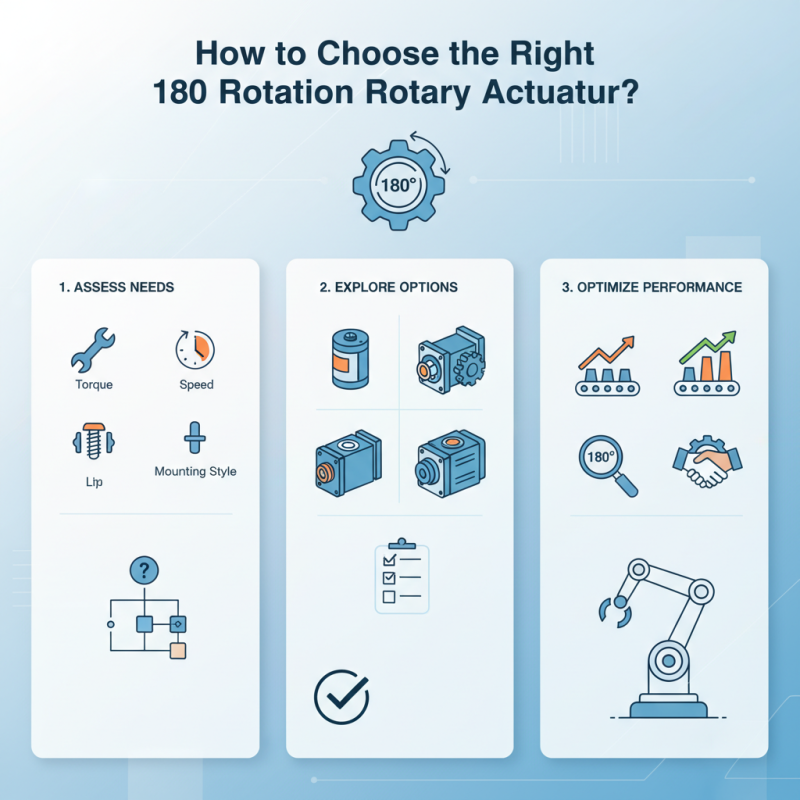
The market is filled with numerous options. Some actuators are compact, while others are large. The choice depends on your specific needs. Factors like torque, speed, and mounting style are key considerations. An incorrect selection may lead to operational inefficiencies. It's important to note that not all actuators are suitable for every task.
Often, users overlook essential features in the selection process. This can lead to frustration later. Take the time to research and evaluate your requirements. A thoughtful approach will yield better results. Remember, the right 180 Rotation Rotary Actuator can greatly enhance your system's capabilities.
Understanding Rotary Actuators: Types and Applications
Rotary actuators are essential in various industries. They convert energy into rotational motion. Understanding the different types of rotary actuators can help in making informed decisions. There are electric, pneumatic, and hydraulic options available. Each type serves unique applications. For example, electric actuators are precise and suitable for automation tasks. Pneumatic actuators are fast and ideal for repetitive motions. Hydraulic actuators offer high power and torque for heavy lifting.
When selecting a rotary actuator, consider the specific needs of your project. Think about the required speed, torque, and accuracy. Different applications might require different actuation methods. It’s crucial to match the actuator type with the operational environment. For instance, electric actuators might struggle in harsh conditions. This can lead to failures and increased maintenance.
While evaluating options, reflect on the potential challenges. Sometimes, too much power can be a problem. An oversized actuator may lead to inefficient operation. Additionally, installation space might limit your choices. A lack of knowledge can also result in poor decisions. Research is vital to avoid costly mistakes and ensure the right fit.
How to Choose the Right 180 Rotation Rotary Actuator?
This chart illustrates the comparative performance of different types of 180 rotation rotary actuators based on their torque and speed ratings. Choosing the right actuator depends on the specific application requirements.
Key Specifications for 180-Degree Rotary Actuators
When selecting a 180-degree rotary actuator, various specifications demand attention. Torque is crucial. It determines the actuator's capacity to perform tasks effectively. For many applications, a higher torque means better performance. However, excessive torque can lead to inefficiencies and mechanical strain. It's essential to find a balance.
Speed is another vital specification. The actuation speed impacts overall operation efficiency. Some tasks require quick movements, while others need slow, deliberate actions. The wrong speed can disrupt processes. Additionally, understanding the type of control needed is important. Many actuators offer different control options. Some need precise positioning; others work with simpler controls.
Consider the environmental conditions. Factors like temperature and humidity can impact actuator performance. Ensure the actuator you choose is rated for your specific environment. Overlooking this detail can result in unexpected failures. Also, look into the actuator's physical dimensions. It needs to fit within your design without forcing adjustments elsewhere. This can sometimes necessitate compromises, impacting overall functionality.
Evaluating Torque Output and Speed Requirements
When selecting a 180-degree rotary actuator, understanding torque output and speed is crucial. Torque is the force that enables the actuator to perform tasks efficiently. Different applications require varying torque levels. For example, heavy loads demand higher torque. Light applications may require less. Identify the load you need to move. Calculate how much torque is necessary for that.
Speed also plays a vital role. An actuator that operates slowly may not suit time-sensitive tasks. Conversely, too high of a speed can lead to inaccurate positioning. It’s about finding the right balance. Determine the speed at which you need the actuator to operate. Consider the motion duration. Are you aiming for swift operations or precise control?
Tips: Always start with a mock setup. It helps visualize the actuator’s performance. Experiment with torque and speed settings. Adjust them based on observed outcomes. If something isn't working, reflect on the parameters. Continuous evaluation leads to better choices. Taking the time to assess these factors will lead to more effective actuator selection.
How to Choose the Right 180 Rotation Rotary Actuator? - Evaluating Torque Output and Speed Requirements
| Model | Torque Output (Nm) | Speed (RPM) | Operating Voltage (V) | Weight (kg) |
| Actuator A | 50 | 30 | 24 | 2.5 |
| Actuator B | 65 | 25 | 12 | 3.0 |
| Actuator C | 75 | 20 | 48 | 4.2 |
| Actuator D | 80 | 18 | 36 | 3.8 |
| Actuator E | 90 | 15 | 24 | 5.0 |
Selection Criteria Based on Environmental Conditions
Choosing the right 180 rotation rotary actuator involves considering various environmental factors. Environmental conditions significantly affect performance and longevity. Think about temperature ranges. Some actuators must work in extreme heat or cold. Moisture and dust levels are also critical. High humidity or particle-laden air can damage sensitive parts.
For outdoor applications, look for actuators with seals that protect against water and dust. Corrosion-resistant materials are a plus. In contrast, indoor settings might allow for simpler designs. But ensure the actuator can handle any chemicals in the environment.
Tips: Always check the actuator's IP rating. An IP67 rating means it’s waterproof and dust-tight. If operating in fluctuating temperatures, thermal expansion can affect function. Keep this in mind during your selection process. Also, consult with experts before making a decision. It’s easy to overlook specifications. Use caution and do your research.
Comparative Analysis of Cost vs. Performance in Actuator Choices
Choosing a rotary actuator involves a complex balance between cost and performance. Many factors come into play. The actuator's torque, speed, and precision are critical for different applications. Sometimes, lower-cost options may compromise functionality. Performance might suffer, leading to operational failures. This creates a need for reflection on what matters most.
In many cases, it’s essential to evaluate long-term results rather than focusing solely on the initial purchase price. A cheaper actuator can lead to higher maintenance costs over time. An actuator that requires frequent repairs might not actually save money. Pay attention to how the actuator integrates with your system. Compatibility can significantly influence performance.
Reflecting on real-world applications exposes additional areas for consideration. Not every actuator will perform well under varying environmental conditions. Factors like temperature and humidity can affect operation. It’s vital to conduct thorough testing. Prioritize the needs of the specific project over general preferences. Balancing these aspects can sometimes prove challenging. However, careful analysis can lead to a well-informed decision.