How to Choose the Right CNC Turning Center for Your Business?
Choosing the right CNC Turning Center can significantly impact your business's efficiency and productivity. There are many options available in the market today. Each CNC Turning Center offers distinct features and capabilities. It is essential to assess your specific needs before making a decision. For instance, consider the materials you work with and the complexity of the parts you produce.
When selecting a CNC Turning Center, budget plays a critical role. Find a machine that fits your financial constraints while still meeting your operational demands. The size of the machine is also vital. A larger machine may offer more versatility, but it also requires more floor space and maintenance.
Additionally, consider the support and training provided by the manufacturer. Poor support can lead to difficulties in operation. Reflecting on your choices is necessary. The machine should enhance your workflow, not complicate it. Balancing these factors ensures that your CNC Turning Center aligns with your business goals.
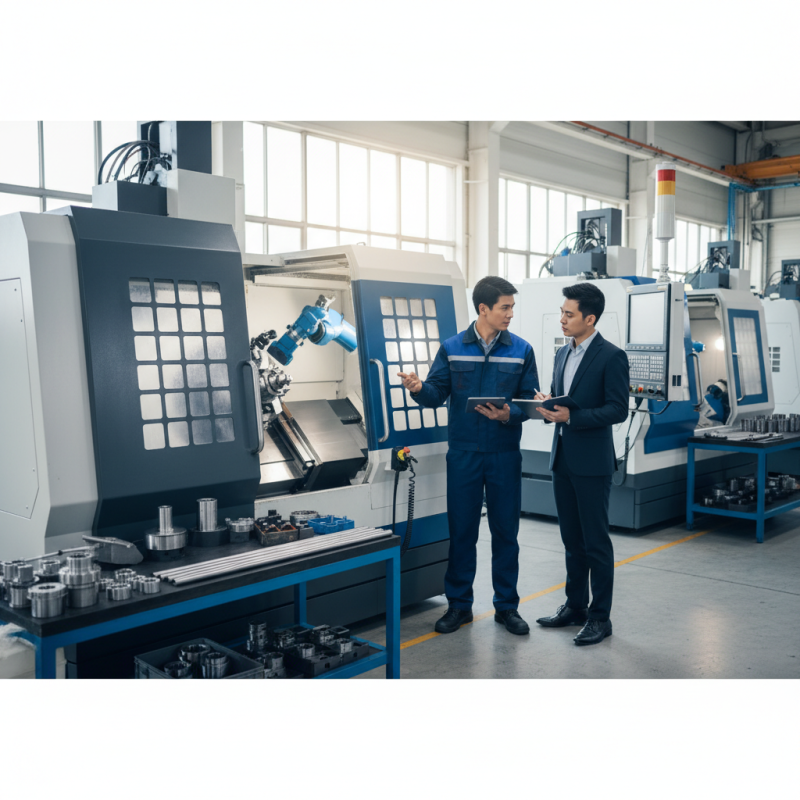
Understanding CNC Turning Centers: Key Features to Consider
Understanding CNC turning centers is crucial for improving productivity in manufacturing. These machines play a vital role in producing precise, complex parts. When selecting a CNC turning center, several key features should be evaluated.
One important aspect is the spindle speed. A higher spindle speed allows for better finishing and quicker cycle times. Reports show that centers with speeds exceeding 4,000 RPM can reduce manufacturing time by up to 20%. This is significant in competitive industries. Additionally, the bed length affects the size of the workpieces. A longer bed can accommodate larger parts, making your business versatile.
Consider the control system as well. A more advanced control system can enhance machining precision. According to a recent industry study, companies using advanced CNC systems saw a 30% reduction in errors. However, training staff to operate these systems can take time. Moreover, while investing in new technology is essential, it’s not always feasible for every business. Balancing cost and functionality is crucial. Each feature must align with specific production goals to ensure a beneficial investment.
Assessing Your Business Needs: Size and Production Requirements
When considering a CNC turning center, size and production requirements are crucial. Evaluate your workspace dimensions first. If your shop is small, large machines might not fit. Think about how often you'll need to move materials. Compact machines can save space and still deliver quality.
Next, assess your production needs. How many parts do you plan to produce daily? If you're ramping up for larger orders, a robust CNC turning center is vital. Consider complexity too. More complex parts may require advanced features. Yet, be cautious about overspending on unnecessary capabilities. Sometimes, simpler machines often perform the job just as well.
Remember the balance between capacity and budget. Many businesses find themselves underestimating their production scale. It's easy to choose a comfortable option. But, future growth should guide your choice. Don’t forget maintenance—larger machines can have higher upkeep costs. Reflect on these elements before making your purchase decision.
Evaluating Machine Specifications: Precision, Speed, and Capacity
Choosing the right CNC turning center involves evaluating essential machine specifications. Precision is crucial for producing high-quality parts. You might prioritize tight tolerances and finish quality. Look for machines that support advanced tooling and features. This can ensure your products meet exacting standards.
Speed cannot be overlooked. Faster machining times can boost productivity. However, speed should not compromise precision. Assess the spindle speed and feed rates carefully. Pay attention to acceleration capabilities as well. Some machines may promise high speeds but may lack stability.
Capacity is another important aspect. Consider the range of materials and part sizes you plan to work with. Can the machine handle large volumes or complex geometries? Ensure it fits your current and future needs. Evaluating these specifications is not straightforward. You might find conflicting priorities or features that don’t align well. Take the time to assess and reflect on your specific requirements carefully.
Choosing the Right CNC Turning Center for Your Business
When evaluating CNC turning centers, it's essential to consider the key specifications such as precision, speed, and capacity. The following chart illustrates a comparison of these specifications across different hypothetical CNC turning centers.
Budgeting for Investment: Cost Analysis and Financing Options
Investing in a CNC turning center requires careful budgeting. Start by analyzing the total cost of ownership. This includes not only the purchase price but also maintenance and operational costs. Many businesses overlook these extra expenses. Allocating funds effectively is crucial for long-term success.
Tips: Keep a spreadsheet to track all potential costs. This visual aid can help in decision-making. It requires diligence but can prevent unexpected financial strains.
Consider financing options that suit your cash flow. Bank loans, leasing, or vendor financing can ease the financial burden. Assess your business's financial health before making a commitment. An inappropriate choice can lead to cash flow problems later on.
Tips: Compare multiple financing offers. Look beyond the interest rate. Terms and conditions can significantly impact your total expenditure. Don't rush; take your time to evaluate and reflect on your options.
Selecting a Reliable Manufacturer: Support and Service Considerations
When selecting a CNC turning center for your business, the manufacturer’s support and service are pivotal considerations. A reliable manufacturer should offer robust customer service. This includes prompt responses to inquiries and technical issues. Evaluate their availability; can you reach them easily? Often, support isn’t just about a phone call; it’s also about online resources. Manuals, troubleshooting guides, and tutorial videos can be just as important.
Training is another essential service. Many manufacturers provide operator training. However, the quality of training can vary significantly. Some might offer comprehensive sessions, while others may fall short. Review the training options thoroughly. Also, check if they offer ongoing support after the initial training phase. Regular updates or refresher courses could be beneficial for your team.
Finally, assess the warranty and maintenance services. A good warranty reflects a manufacturer’s confidence. However, always read the fine print. Some warranties may have hidden limitations. Understand what’s covered and for how long. Regular maintenance can help avoid costly breakdowns. Ask if the manufacturer has a maintenance program. Engaging with these aspects can help ensure a smoother operation and lasting effectiveness of your CNC turning center.
How to Choose the Right CNC Turning Center for Your Business? - Selecting a Reliable Manufacturer: Support and Service Considerations
| Criteria | Importance Level | Typical Response Time | Parts Availability (%) | Customer Satisfaction Rating |
| Technical Support | High | Within 1 hour | 90% | 4.8/5 |
| Training Provided | Medium | 24 hours | 85% | 4.5/5 |
| Warranty Duration | High | N/A | N/A | 4.9/5 |
| Spare Parts Support | High | 3 days | 95% | 4.7/5 |
| Customization Options | Medium | 48 hours | 80% | 4.6/5 |
