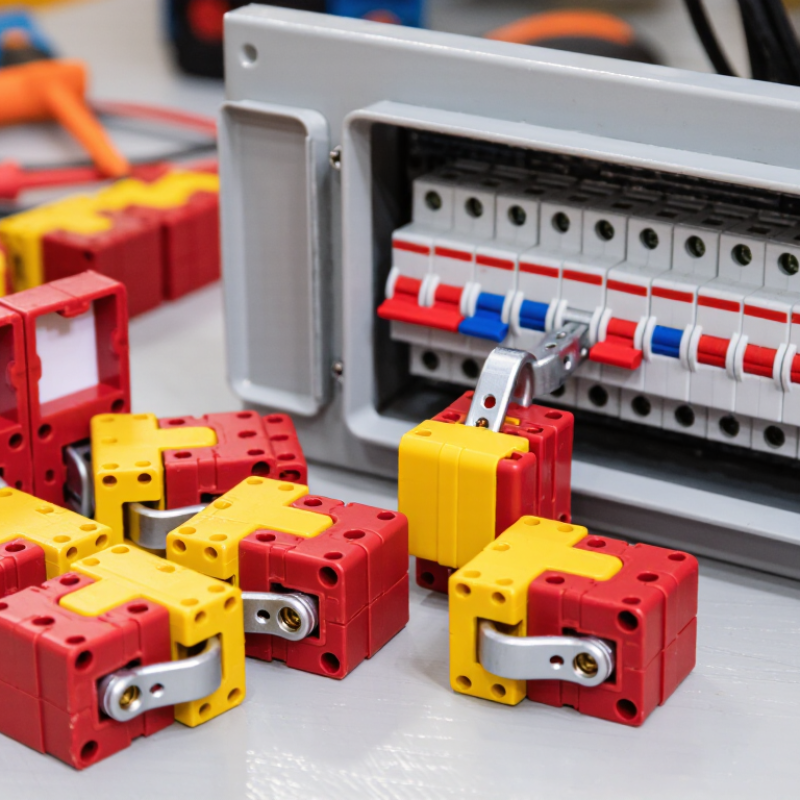
Selecting a reliable supplier for a China Top 10 Mcb Lock Off Kit comparison takes more than checking prices. Buyers need to assess product fit, build quality, and the evidence behind each supplier’s claims. A kit should match the breaker design it is intended for, hold securely, and remain easy to identify during routine maintenance. Small details matter: a loose clamp, unclear labeling, or brittle plastic can undermine confidence in daily use.
This introduction uses an illustrative expert rather than a verified real-world source: electrical-safety specialist Lin Wei is presented as a fictional composite voice. The guiding line is: “A lock-off device is only useful when it fits the breaker, stays secure, and is easy to verify.” Treat that sentence as editorial guidance, not a sourced quotation. That distinction matters.
The sections ahead compare suppliers through practical questions: Do they publish clear dimensions and material information? Can they explain compatibility and provide sample units for evaluation? Are packaging, lead times, and after-sales support described plainly? A polished catalogue is not proof of dependable performance. Nor does a low quote tell the full story. Readers should verify specifications against their own equipment and assess each supplier’s documentation before making a purchasing decision. No ranking can replace that check.
An MCB lock-off kit is a mechanical accessory that holds a miniature circuit breaker’s handle in the OFF position and accepts a padlock. IEC 60898-1:2015 covers household and similar AC circuit breakers rated up to 440 V between phases and 125 A, with rated short-circuit capacity up to 25 kA. These figures define the breaker standard’s scope. They do not certify a lock-off kit or guarantee that it fits a particular breaker.
Fit matters. A clamp that looks secure may still slip on a narrow or recessed toggle. Check the breaker’s handle shape, spacing, enclosure clearance, and the accessory maker’s stated compatibility before use. A useful kit should stay fixed under a gentle pull and allow the handle to remain visibly OFF. Small part. Big consequence. Still, a padlock is not proof that a circuit is de-energized.
IEC 60898-1 provides the technical rating boundaries; NFPA 70E’s electrical safe-work guidance addresses establishing an electrically safe work condition. In practice, workers should isolate the circuit, apply the lock-off device, and verify absence of voltage with a properly rated tester. That last check is easy to rush, especially in crowded panels. It should not be. A lock-off kit supports safe isolation, but it cannot replace site procedures, training, or voltage testing.
IEC 60898-1 applies to specified AC circuit-breakers with rated currents up to 125 A and rated voltages up to 440 V. The bars show selected rated-current values in amperes; they do not represent supplier rankings or confirm lock-off kit compatibility. Compatibility depends on the breaker’s design and the lock-off device’s fit.
Reference: IEC 60898-1 scope. Check the applicable edition and product documentation when assessing a specific breaker or accessory.
Pole count is the first compatibility check when evaluating MCB lock-off kits. Single-pole, double-pole, and three-pole breakers differ in width and handle spacing. A locking device must engage the intended handles without pressing against neighboring breakers. Small details matter. Measure the breaker face and handle gap, then compare them with the kit’s stated range. Also check whether the handles move independently or are joined by a common bar. A kit designed for one arrangement may sit crookedly on another. That small mismatch can make installation awkward or prevent secure locking.
Handle shape matters just as much. Some breakers have narrow, recessed toggles; others have wider handles with a hole or slot for a locking pin. Check the handle thickness, travel direction, and available clearance inside the distribution board. Fit is not universal. Ask suppliers for dimensional drawings, clear product photos, and samples that match the breaker model and pole count. For a China-based supplier shortlist, compare these details alongside material quality, inspection records, and the consistency of supplied specifications. A polished catalogue is useful, but it does not prove compatibility. Have a qualified person verify isolation and fit before use; never force a lock-off device onto a breaker.
For an MCB lock-off kit, suppliers should identify the exact breaker types and applications tested. IEC 60898-1 covers household and similar circuit-breakers; IEC 60947-2 covers industrial circuit-breakers. These standards do not, by themselves, certify a lock-off accessory. Ask for a compatibility matrix, installation instructions, and test reports showing secure fit and resistance to pull-off or rotation. Reports should state sample numbers, test conditions, acceptance limits, and failures—not only a pass stamp. Small details matter. A loose device can defeat a careful isolation procedure.
Request material data and documented checks for heat, impact, corrosion, and repeated fitting. Where relevant, suppliers can identify the flame-test method used, such as IEC 60695-11-10, and explain how its results apply to the finished product. Independent laboratory reports should name the test facility and its accreditation scope; ISO/IEC 17025 accreditation supports confidence in laboratory competence, not product certification. ISO 9001 documents quality-management processes, not the safety of a specific kit. The ILO’s 2023 global estimates reported 2.93 million work-related deaths in 2019 and 395 million non-fatal work injuries in 2021. Those figures make traceable evidence more than paperwork. In practice, certificates can look complete while leaving fit, durability, or user instructions untested. I would ask for raw results.
Ranking China’s top 10 MCB lock-off kit suppliers requires more than comparing catalog pages. A strong supplier offers devices for different miniature circuit breaker widths, toggle shapes, and panel layouts. Look for clear product dimensions, compatible breaker examples, material specifications, and instructions for fitting a padlock. Small details matter.
Export data can help verify market reach, but it needs careful interpretation. Shipment databases may group lockout products under broad customs categories, so reported volumes do not always identify MCB kits alone. Compare shipment frequency, destination markets, and consistency across several years. Check the records. Treat unexplained spikes cautiously.
A practical shortlist should combine this evidence with product range and manufacturing capability. Ask suppliers for dated catalogs, sample kits, test documentation, and photographs showing the device installed on an actual breaker. Review whether they offer adjustable or universal designs, single-pole and multi-pole options, and replacement components. A supplier with broad coverage may still have gaps; I would verify fit on the breaker models used at your sites. Public data rarely supports a precise ranking by itself, so any “top 10” should state its criteria and acknowledge uncertainty.
When comparing China-based MCB lock-off kit suppliers, request quotes for the same configuration: breaker profile, pole count, lockout points, labels, and packaging. Otherwise, a lower unit price may simply reflect a smaller kit. Compare MOQ at sample, pilot, and repeat-order stages, and ask whether mixed models count toward the minimum. Small details matter. A spreadsheet can still hide setup fees or tooling charges, so request these separately.
For lead time, separate production days from shipping days and ask for recent on-time delivery records, not just an estimated dispatch date. The World Bank’s 2023 Logistics Performance Index assessed 139 economies across six dimensions, including customs and timeliness; this is useful context, but it cannot predict one shipment’s arrival. Check certifications against the actual breaker and accessory scope. IEC 60898-1 covers household and similar circuit-breakers, while industrial breakers may follow IEC 60947-2; a certificate for one component does not automatically certify the whole kit. Finally, compare warranty duration, covered defects, evidence requirements, and replacement freight in writing. I would not treat a long warranty as proof of quality by itself. Ask how claims were handled on recent orders, and verify that the terms match the quotation.
Buyer comparison worksheet: The entries below are supplier-profile categories, not verified quotations or claims about specific companies. MOQ and lead-time bands are suggested RFQ planning ranges only; actual terms depend on product configuration, stock, order volume, and destination. Confirm every item directly with the supplier before purchasing.
| Supplier Profile | Typical Product Focus | MOQ to Use as an RFQ Starting Point | Lead-Time Questions to Confirm | Compliance Documents to Request | Warranty Terms to Compare | Buyer Checks |
|---|---|---|---|---|---|---|
| 1. Electrical safety-product manufacturer | Lockout devices, tags, hasps, and related electrical safety products. | Ask for separate quotes at 50, 100, and 500 kits; these are comparison quantities, not a stated supplier minimum. | Request in-stock and made-to-order schedules separately; confirm production days, dispatch date, and shipping time. | Product specifications, material details, inspection records, and any applicable test reports. Do not assume a kit has a certification simply because individual components do. | Confirm the warranty period, covered defects, exclusions, claim process, and whether replacement freight is covered. | Check that the kit fits the buyer’s specified breaker models and that the instructions identify installation limitations. |
| 2. MCB and circuit-protection manufacturer | Miniature circuit breakers and compatible lockout accessories. | Request accessory-only MOQ and combined breaker-and-lockout MOQ; they may differ. | Check whether the accessory is stocked independently or supplied only with a breaker order. | For the MCB itself, request relevant product documentation, such as applicable IEC test evidence. IEC 60898-1 and IEC 60947-2 apply to different categories of circuit breakers; confirm the correct standard for the product and market. | Clarify whether the accessory and breaker have separate warranty terms. | Verify compatibility by breaker series, dimensions, operating handle, and pole configuration—not just by the term “MCB.” |
| 3. Lockout/tagout (LOTO) specialist | Lockout devices, padlocks, tags, group-lockout products, and procedures. | Ask for a mixed-kit MOQ and the minimum order for customized tags or packaging. | Confirm whether customization, artwork approval, or sample approval adds production time. | Request material and product test information relevant to the intended application. Ask which claims are independently tested and which are supplier specifications. | Compare coverage for device defects with any separate policy for consumables or customized items. | Review tag readability, attachment method, temperature or chemical limitations, and compatibility with the buyer’s LOTO procedure. |
| 4. Electrical accessories OEM/ODM factory | Private-label or customized lockout kits and electrical accessories. | Request written MOQ for standard stock, logo-only orders, and fully customized kits as three separate options. | Ask for sample, artwork, tooling, and mass-production schedules as distinct milestones. | Request a document list by exact SKU and component. Check report issuer, report date, product model, and whether the supplied item matches the tested item. | Get the warranty in the sales contract, including remedies and response times for nonconforming batches. | Confirm ownership and approval of artwork, packaging specifications, change control, and pre-shipment inspection arrangements. |
| 5. Industrial safety equipment supplier | Multi-category safety products, sometimes including electrical lockout kits. | Ask whether the MOQ applies per kit, per component, or per shipment; request a mixed-SKU quote. | Confirm stock by component and whether incomplete kits can delay shipment. | Request product-level documentation rather than a general company certificate. Verify any market-specific conformity documents with the importer or compliance adviser. | Check whether warranty claims are handled by the supplier, the manufacturer, or a local distributor. | Check kit contents against the packing list and verify replacement-part availability. |
| 6. Export-oriented sourcing supplier | Aggregated kits sourced from one or more factories for export orders. | Request MOQ by final assembled kit and ask whether components come from multiple production sources. | Ask for a component-level schedule and a single confirmed ship date for the complete order. | Request traceability to the actual manufacturer and model for each regulated component; review documents before deposit or shipment. | Confirm who is contractually responsible for warranty service and defective-product replacement. | Identify the manufacturer of each component and establish who controls final assembly and quality inspection. |
| 7. Custom kit assembler | Buyer-defined kits combining lockout devices, tags, padlocks, and instructions. | Ask for minimums for standard assembly and for each custom component; request a sample kit first. | Confirm component availability, assembly time, and the effect of late specification changes. | Collect documents for each included product and ensure the kit description does not imply unsupported certification of the complete kit. | Ask whether warranty coverage applies to individual components, assembly quality, or both. | Approve a bill of materials and sample before production; define acceptable substitutions in writing. |
| 8. Online B2B catalogue supplier | Standard catalogue lockout devices and preassembled kits. | Use the listed MOQ only as an initial indication; confirm it in a dated quotation for the exact SKU. | Distinguish advertised dispatch time from delivery time and confirm current stock before payment. | Request original or verifiable copies of relevant reports and check that model numbers match the listing and invoice. | Read the written return and warranty policy; confirm how claims are handled for export orders. | Check product photos, dimensions, contents, seller identity, and shipping terms against the final quotation. |
| 9. Regional distributor or trading supplier | Resale of lockout products from domestic or overseas manufacturers. | Ask about carton quantity, mixed orders, and whether the MOQ is set by the distributor or original manufacturer. | Confirm local stock, replenishment time, and the country from which the goods will ship. | Request manufacturer and model details, plus documentation applicable to the intended destination market. | Confirm whether the distributor can honor the manufacturer’s warranty and provide a local point of contact. | Verify authorization where relevant, invoice details, product origin, and availability of after-sales support. |
| 10. Project-focused safety supplier | Configured lockout kits for maintenance teams, facilities, or industrial projects. | Request a project quote based on the approved bill of materials and ask how additional units are priced. | Ask for a delivery plan tied to project milestones and confirm the availability of spare or replacement components. | Request a document pack matched to the project specification; acceptance depends on the buyer’s site rules and applicable regulations. | Compare defect remedies, support contact, and response commitments in the project contract. | Review a representative sample, user instructions, packaging labels, and the final kit contents before approving the order. |

Practical comparison rule: Compare like-for-like quotations for the same kit contents, breaker compatibility, order quantity, delivery destination, and Incoterm. Treat certificates, lead times, MOQ, and warranty as unverified until documented for the exact product and order.