2026 Top Trends in Machine Mold Technology and Innovation Insights?
In the rapidly evolving field of machine mold technology, staying ahead of trends is crucial for innovation and efficiency. Renowned expert Dr. Emily Chen, a leader in polymer engineering, highlights, "The future of machine mold design lies in adaptability and smart technologies." This insight reflects the pressing need for the industry to embrace change.
The year 2026 promises to unveil significant advancements in machine mold technology. New materials and smarter manufacturing processes are on the rise. Companies are exploring additive manufacturing techniques, leading to customized solutions. However, the transition presents challenges, including the need for skilled workers who understand the latest technologies.
While the promise of machine mold innovation is exciting, it demands careful consideration. Current practices may not fully align with emerging trends. The risk of stagnation looms if the industry does not adapt. Analyzing how various stakeholders react to these shifts will be essential. The quest for excellence in machine mold technology is ongoing, and the future remains a blend of opportunity and reflection.

2026 Insights on Smart Materials in Machine Mold Technology
The landscape of machine mold technology is evolving, particularly with the incorporation of smart materials. In 2026, the demand for agility and efficiency drives innovation. Smart materials, known for their adaptability, enable molds to respond dynamically to environmental changes. A recent industry report estimates that the smart materials market will grow by over 25% in the next five years, highlighting their increasing importance in mold applications.
These materials can change shape, density, or color in response to stimuli like temperature or pressure. This capability drastically enhances production efficiency and precision, making molds lighter and more flexible. Engineers are exploring these materials for improved performance under varying conditions. Yet, challenges exist. The integration of smart materials requires a rethinking of traditional design paradigms.
Tips: Consider training your team on the properties of smart materials. Understanding these nuances can lead to innovative mold designs. Stay updated with industry trends to better anticipate supply chain shifts. Embracing a culture of continuous learning will prepare businesses for future challenges. Each step taken today shapes the industry's landscape tomorrow.
Innovations in Additive Manufacturing for Mold Production
Additive manufacturing is revolutionizing the mold production industry. This technology allows for complex geometries. It reduces waste and enhances efficiency. By using 3D printing, manufacturers can create molds with intricate designs that were once impossible. This leads to better performance and shorter lead times.
Tips: Consider investing in training for your team. Familiarity with new technologies will enhance your production capabilities. Keep an eye on the latest software developments in this space. Adopting cutting-edge design software can bring significant improvements.
While additive manufacturing holds promise, challenges remain. Material limitations can impact the durability of molds. Some printed molds may not withstand high temperatures or pressures. Testing is crucial to understand each material's capabilities. This reflection on material properties is essential for high-stakes manufacturing environments.
2026 Trends in Machine Mold Technology
Impact of Automation on Mold Design Efficiency and Cost Reduction
The rise of automation in mold design is transforming the manufacturing landscape. Data indicate that organizations adopting automation can achieve up to a 30% reduction in design time. This efficiency translates into faster production cycles and lower operational costs. The shift towards automated systems allows for precise adjustments, enhancing mold accuracy. As a result, industries enjoy better product quality with fewer defects.
Innovation in machine mold technology also plays a crucial role. Advanced software solutions streamline the design process. These tools enable engineers to simulate and analyze mold performance under various conditions, promoting informed decisions. Nevertheless, transitioning to automated systems may require significant initial investment and a learning curve for staff. Companies must weigh the long-term benefits against short-term challenges.
Tips: Involve your team early when integrating automation. Their insights can guide smoother transitions. Additionally, consider incremental changes instead of a complete overhaul. This approach can help mitigate risks.
As automation reshapes mold design, continuous learning is essential. Businesses must stay updated with emerging technologies. Emphasizing training and adaptation will ensure that companies remain competitive in a rapidly evolving market.
2026 Top Trends in Machine Mold Technology and Innovation Insights
| Trend |
Description |
Impact on Design Efficiency |
Cost Reduction Percentage |
| Advanced 3D Printing |
Utilizing advanced additive manufacturing techniques to produce molds directly from CAD models. |
High |
20% |
| Smart Sensors Integration |
Integrating IoT sensors into mold designs for real-time monitoring and data analysis. |
Medium |
15% |
| Automation in Mold Production |
Implementing robotic automation for faster and more consistent mold production processes. |
Very High |
25% |
| Sustainable Materials |
Using eco-friendly and recyclable materials for mold manufacturing to reduce environmental impact. |
Medium |
10% |
| Digital Twin Technology |
Creating digital replicas of molds for simulation and optimization purposes. |
High |
18% |
| AI in Mold Design |
Leveraging AI and machine learning algorithms to enhance mold design processes and decision-making. |
Very High |
22% |
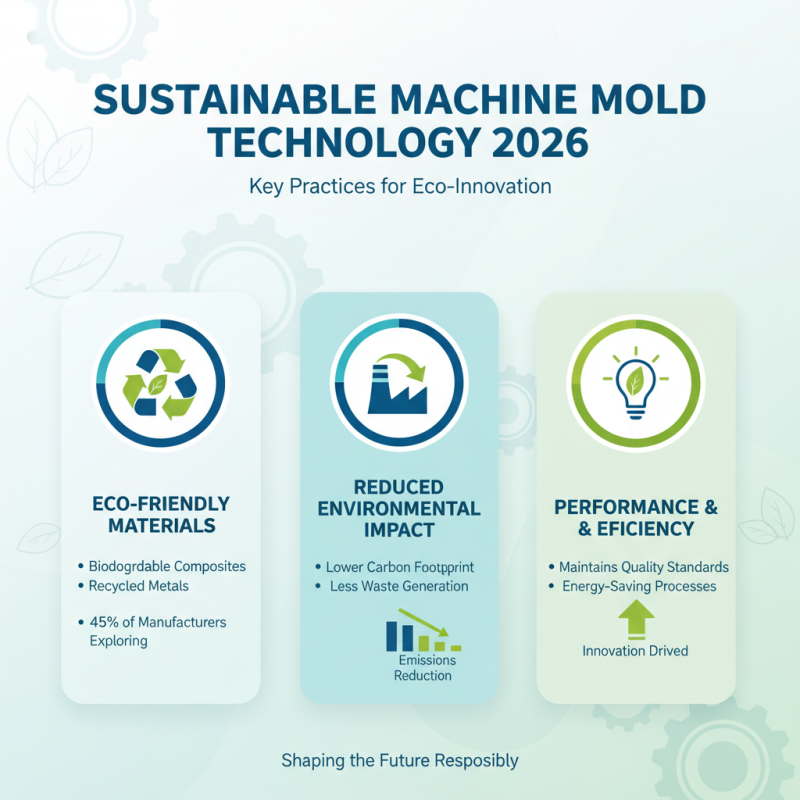
Sustainable Practices in Machine Mold Technology for 2026
Sustainable practices in machine mold technology are crucial for innovation in 2026. As the industry shifts towards eco-friendliness, adopting sustainable materials is vital. Reports indicate that approximately 45% of manufacturers are exploring biodegradable composites and recycled metals. These materials offer better environmental profiles while maintaining performance standards.
Energy efficiency is another focal point. Current studies show that molds account for about 30% of the total energy consumption in manufacturing. Implementing energy-efficient heating systems and using advanced insulation can reduce this significantly. Companies are reporting energy savings of up to 20% after upgrading to these systems. However, barriers like initial costs and training remain.
Yet, challenges persist. Workers often lack training in new sustainable processes, impacting productivity. Moreover, there's skepticism around the reliability of new materials. Data suggests that 33% of mold manufacturers struggle with transitioning to greener practices. Ongoing education and pilot projects may mitigate these concerns. The industry must reflect on these gaps, fostering a culture of continuous improvement to fully embrace sustainable mold technologies.
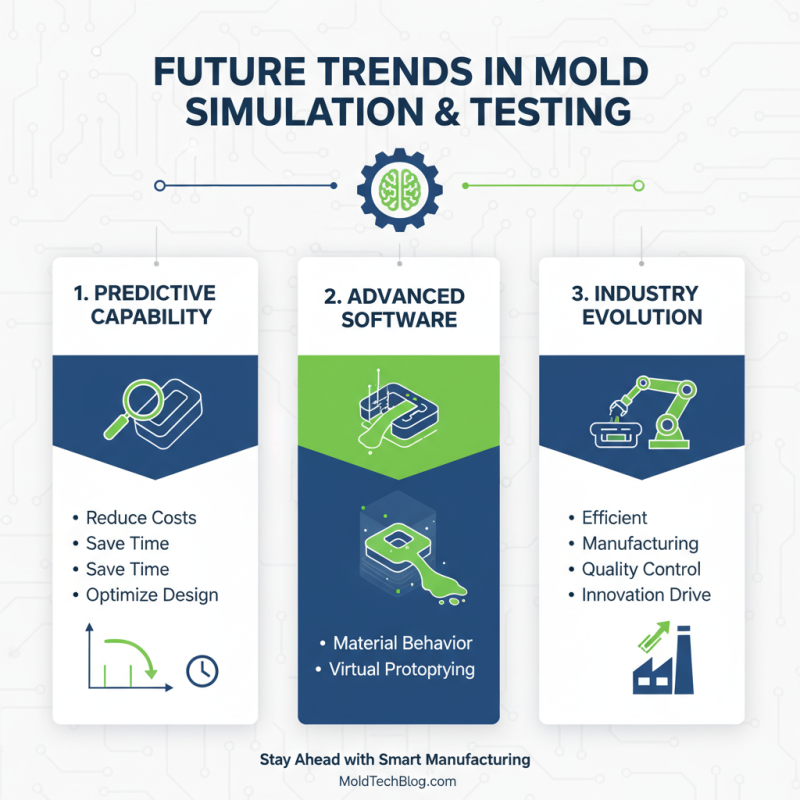
Future Trends in Mold Simulation and Testing Techniques
As the industry evolves, mold simulation and testing techniques have become pivotal in the manufacturing sector. Accurate simulations allow engineers to predict outcomes more effectively. This predictive capability can reduce costs and time spent on prototyping. Advanced software is now able to create dynamic simulations, offering insights into material behavior under various conditions.
Tips: Invest in training for your team. Understanding the latest simulation tools can enhance efficiency. Experimenting with different materials in simulations can yield surprising results.
Testing techniques are also innovating rapidly. Techniques such as Digital Twin technology help create an exact replica of the mold. This replica can provide real-time data, enabling immediate adjustments. However, many companies still rely on outdated methods. Failing to adapt can lead to missed opportunities, as the landscape shifts.
Tips: Regularly assess your testing methodologies. Integrating new technologies can provide a competitive edge. An open mind towards change fosters innovation.