
For global buyers, choosing the right Steel Metal Plate in 2026 requires more than comparing prices. Material grade, thickness, surface condition, delivery distance, and certification can affect the final cost. A plate that looks suitable in a warehouse may fail under heat, corrosion, heavy loading, or repeated impact.
This guide examines widely purchased types, including carbon steel plate, stainless steel plate, galvanized plate, alloy steel plate, and weathering steel plate. Each type serves a different purpose. Carbon steel suits structural frames and machinery bases. Stainless steel performs well in food processing, chemical facilities, and coastal environments. Galvanized plate offers practical corrosion protection for outdoor equipment. Alloy grades can provide improved strength, toughness, or heat resistance. Weathering steel develops a protective surface in suitable climates, but it is not ideal everywhere.
Details matter.
Experienced buyers should check grade designations, dimensions, flatness, edge quality, and surface defects. Mill test certificates, heat numbers, inspection records, and traceable packaging support dependable purchasing decisions. Recognized standards such as ASTM, EN, and JIS may use different requirements, so direct comparison needs care. Supplier reputation also matters, especially when plates travel across borders and replacement deliveries become expensive.
No single plate is best for every project. That sounds obvious, yet rushed procurement often ignores operating conditions. Humidity, welding methods, load cycles, and maintenance access deserve practical attention. A reliable supplier should explain limitations, not only promote the strongest grade. Careful specification, independent verification, and realistic logistics can help global buyers purchase Steel Metal Plate with greater confidence in 2026.
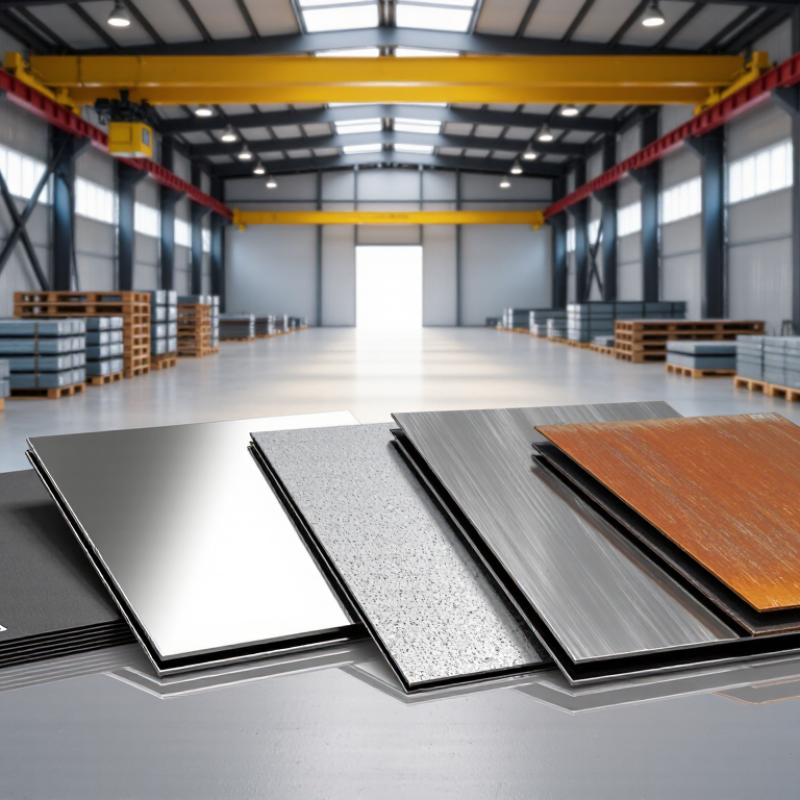
Steel metal plate is a flat-rolled product used in bridges, pressure equipment, machinery, and heavy structures. It is often classified above about 6 mm thick, although definitions vary by standard and market. The World Steel Association reported 1,882.6 million tonnes of crude steel production in 2024. That scale shows why consistent plate quality matters to global buyers.
Its structure controls performance. Low-carbon plate commonly contains ferrite and pearlite, balancing weldability with strength. Quenched and tempered grades may contain bainite or martensite, improving hardness and impact resistance. Stainless plate uses chromium-rich structures for corrosion resistance. Grain size, inclusions, rolling direction, and heat treatment can change bending behavior. The plate may look uniform. Internal variation still matters.
Core properties include yield strength, tensile strength, elongation, impact toughness, hardness, and corrosion resistance. ISO 6892-1 specifies tensile testing methods for metallic materials, while Charpy testing helps assess low-temperature toughness. In practical inspection, I would check the mill certificate, thickness tolerance, surface condition, ultrasonic results, and heat number together. A certificate alone is not the whole truth. Small lamination defects can remain invisible until cutting or welding. Data from the World Steel Association supports market scale, but it does not guarantee every plate is suitable for every design. Selection should match the load, temperature, joining method, and applicable standard.
| Steel Plate Type | Definition and Typical Standards | Metallurgical Structure | Key Mechanical Properties | Common Thickness Range | Typical Applications | Important Buying Considerations |
|---|---|---|---|---|---|---|
| Carbon Structural Steel Plate | Low-carbon or medium-carbon plate used for general structural fabrication. Common specifications include ASTM A36 and EN 10025-2 grades such as S235JR and S275JR. | Usually ferrite-pearlite at low and moderate carbon levels. The proportion of pearlite generally increases with carbon content. | Good weldability and formability; typical minimum yield strength is about 235–275 MPa for widely used grades. | Approximately 4–150 mm, depending on the grade, mill, and supply condition. | Buildings, platforms, bridges, frames, brackets, machinery bases, and general fabricated structures. | Confirm the governing standard, yield strength, impact-test requirement, thickness tolerance, surface condition, and welding procedure. |
| High-Strength Low-Alloy Plate | Microalloyed structural plate containing small additions of elements such as niobium, vanadium, or titanium. Examples include ASTM A572 Grade 50 and EN 10025-3 normalized fine-grain grades. | Fine-grained ferrite-pearlite or similar controlled low-carbon structures produced through alloying and thermomechanical processing. | Higher strength-to-weight ratio than basic structural steel; common yield-strength levels are approximately 345–550 MPa. | Approximately 6–100 mm for many commercial supply programs. | Heavy structures, transport equipment, cranes, towers, bridges, and load-bearing components where weight reduction is useful. | Check weldability, carbon equivalent, minimum impact temperature, delivery condition, and whether the grade is normalized or thermomechanically controlled. |
| Weathering Steel Plate | Atmospheric-corrosion-resistant structural steel designed to form a protective oxide layer under suitable outdoor exposure. Common standards include ASTM A588 and EN 10025-5. | Low-carbon structural matrix with alloying additions, commonly including copper, chromium, nickel, and phosphorus, depending on the grade. | Structural strength comparable to many HSLA grades and improved resistance to atmospheric corrosion when conditions allow stable patina formation. | Approximately 5–100 mm. | Bridges, outdoor sculptures, railway structures, façades, containers, and exposed architectural steelwork. | Not recommended for continuously wet, salt-spray, submerged, or poorly ventilated environments without additional protection. Surface appearance changes during weathering. |
| Boiler and Pressure-Vessel Plate | Carbon, manganese, or alloy steel plate manufactured for pressure-retaining equipment. Common specifications include ASTM A516 and EN 10028 pressure-vessel grades. | Typically normalized ferrite-pearlite or fine-grained alloy structures, depending on grade and heat treatment. | Good notch toughness and weldability, with strength and impact performance specified for elevated or low service temperatures. | Approximately 6–250 mm, subject to grade and production route. | Boilers, storage tanks, reactors, heat exchangers, pressure vessels, and process equipment. | Verify impact-test temperature, ultrasonic testing, heat-treatment condition, plate thickness, forming requirements, and applicable design code. |
| Shipbuilding and Marine Plate | Structural plate qualified for hulls and marine structures under recognized shipbuilding specifications. Typical grades include A, AH, DH, and EH strength categories. | Fine-grained low-carbon structural steel, supplied as rolled, normalized, or thermomechanically controlled plate depending on grade. | Good weldability, fatigue resistance, and low-temperature impact toughness; higher-strength grades commonly provide yield strengths around 315–390 MPa. | Approximately 5–100 mm for hull and marine structural components. | Ship hulls, offshore structures, decks, bulkheads, marine platforms, and port equipment. | Certification, impact toughness, ultrasonic inspection, through-thickness properties, weldability, and approval by the required marine classification system are critical. |
| Abrasion-Resistant Steel Plate | Quenched and tempered alloy plate designed to resist sliding, impact, and gouging wear. Hardness classes are commonly identified by nominal Brinell hardness, such as 400 or 500 HBW. | Predominantly tempered martensite, sometimes with bainitic components, depending on chemistry and cooling conditions. | High hardness and wear resistance; nominal hardness commonly ranges from about 400 to 550 HBW, with lower formability than mild steel. | Approximately 4–100 mm. | Dump bodies, crushers, hoppers, chutes, conveyors, mining equipment, buckets, and recycling machinery. | Use approved preheating and welding practices. Confirm hardness tolerance, impact requirements, bending radius, cutting method, and expected wear mechanism. |
| Quenched and Tempered High-Strength Plate | Heat-treated structural plate supplied after quenching and tempering for high strength and controlled toughness. Standards include EN 10025-6 and comparable national specifications. | Tempered martensite or a mixed tempered martensitic-bainitic structure. | Typical yield strengths range from approximately mast 690 to over 1,000 MPa, depending on grade; high strength supports lighter structures. | Approximately 6–80 mm. | Mobile cranes, lifting equipment, heavy vehicles, pressure components, construction machinery, and high-load frames. | Welding heat input, hydrogen control, preheating, post-weld treatment, bending limits, and hardness near the heat-affected zone require careful control. |
| Stainless Steel Plate | Corrosion-resistant alloy plate containing at least about 10.5% chromium by mass. Major families include austenitic, ferritic, martensitic, and duplex stainless steels. | Structure depends on family: austenite, ferrite, martensite, or austenite-ferrite duplex. Nickel, molybdenum, and nitrogen may improve corrosion or mechanical performance. | High corrosion resistance and cleanability; austenitic grades generally offer excellent formability, while duplex grades provide high strength and chloride resistance. | Approximately 0.5–150 mm, with thicker products available for specialized projects. | Food processing, chemical equipment, water treatment, architecture, medical facilities, energy systems, and marine applications. | Specify grade, surface finish, corrosion environment, chloride exposure, solution-annealing condition, intergranular-corrosion requirement, and welding method. |
| Galvanized Steel Plate | Steel plate protected by a zinc coating applied through hot-dip galvanizing or another zinc-coating process. Product specifications define coating mass and substrate properties. | Low-carbon or structural steel substrate with a zinc or zinc-alloy coating; hot-dip products may contain iron-zinc intermetallic layers beneath the outer zinc layer. | Good general corrosion protection in many atmospheric environments; formability and weldability depend on substrate grade and coating thickness. | Approximately 0.4–6 mm for many continuous-line products; thicker galvanized plate may be available through batch processes. | Roofing, wall panels, ducts, agricultural structures, automotive components, enclosures, and general fabrication. | Confirm coating designation, spangle or surface appearance, passivation, forming radius, repair requirements after cutting, and corrosion exposure category. |
| Checkered or Patterned Plate | Steel plate with raised patterns, commonly tears, diamonds, or other textures, to improve walking traction and reduce slipping. | Usually carbon structural steel with a hot-rolled base and an integral raised pattern formed during rolling. | Provides structural load capacity similar to the specified base grade while increasing surface grip; effective thickness varies with the pattern. | Commonly 2.5–12 mm base thickness, with pattern height added to the nominal overall thickness. | Stairs, walkways, platforms, vehicle floors, industrial flooring, ramps, and equipment access areas. | Specify base thickness separately from pattern height, pattern direction, flatness, slip performance, drainage needs, and dimensional tolerances. |
| Corten-Type Weathering Plate | Trade-neutral description for copper-bearing atmospheric-corrosion-resistant steel. The exact grade should be selected from the applicable national or international standard. | Low-carbon structural steel with alloying elements that promote a relatively stable, adherent patina in suitable atmospheric conditions. | Good outdoor durability and structural performance; corrosion resistance depends strongly on wet-dry cycling and environmental exposure. | Approximately 5–80 mm. | Landscaping, façades, bridges, rail infrastructure, outdoor furniture, and architectural features. | Ensure drainage and ventilation, prevent contact with runoff-sensitive materials, and avoid use in marine or permanently damp environments without engineering protection. |